Tray.ai
Migrating hundreds of thousands of pages, re-platforming and extending for the leading composable AI integration platform
View case study
SaaS marketing sites never sit still: new features, new pricing, a landing page for every campaign. We build Sanity and Next.js platforms where product marketing ships those changes without an engineering ticket, backed by structured content that survives the next repositioning.
A SaaS marketing site is never finished. There is a new feature, a new pricing page, a landing page for every campaign, and a repositioning roughly once a year. The builds that survive that are the ones where product marketing can ship a page without opening a ticket.
Key ESG wanted a fast site their team controlled, so we built a Next.js and Sanity page builder with a tailored SEO component on every page and a form builder inside Sanity itself, wired into their CRM with precise labeling so forms get created by the people who need them. Tray needed the opposite scale of problem solved: five repositories consolidated into one Turborepo monorepo, 25 complex page types, and a Contentful instance stripped of bloated models and rebuilt as a page builder with live preview on any route.
Topaz Labs came to us for documentation rather than marketing. Their CEO wanted everything in one deeply customizable platform, so we built it on Sanity, Next.js and Vercel with custom input components and a live preview system, in four weeks.
Next.js on Vercel with Sanity for content is the pairing we recommend most, and the reasons are specific rather than general. Preview deployments on every change mean a reviewer sees the page before it ships. Sanity's Live Content API removes the publish-and-wait cycle, which is how Synacti's team got a visual page builder with real-time updates through Presentation.
Where a client already has a CMS worth keeping, we keep it. Tray stayed on Contentful and the work went into decluttering the content models and building a page builder on top. Teckro was already on Sanity v2, so the relaunch and the v2 to v3 migration happened together rather than carrying the old schemas across.
Design systems come up on nearly every project at this size. Key ESG and Topaz Labs both use Chakra UI for accessibility and responsiveness, and Tabby AI's library was documented and tested component by component in Storybook so both teams worked from the same reference.
Tray's build times dropped 99.86%. A full workday of build time came down to two minutes, so deploys that took 24 hours now finish in 120 seconds. Half a million pages moved to Vercel in six weeks, done progressively rather than as one cutover, and the site now serves more than a million monthly visitors. It held 0% downtime through two DDoS waves, with Speed Insights scores in the high 90s.
Teckro's full website relaunch and Sanity v2 to v3 migration shipped in eight weeks, on Next.js and Vercel with a cleaned-up backend rather than the old schemas carried forward.
Topaz Labs got their documentation platform in four weeks. Synacti's site was built with v0 generating over 90% of the code, which is what left time for a Matter.js interactive hero and a user-controlled theme picker to be built by hand.
The failure mode we see most in SaaS is a site that was fine at launch and is now the slowest part of the marketing team's week. Tray's old setup is the clearest version of it: Next.js 9 on fragile AWS Serverless functions, 250 MB packages choking every deploy, previewing a change meant a full production build, form logic lived in a separate repository, and failed deploys were a weekly event. Marketing releases stalled and rankings slid while pages crawled.
Avoiding that is mostly about where the content model sits. Content that is structured once and surfaced in many places survives a repositioning; pages built as one-off layouts do not. Teckro got dedicated event document types and Portable Text for embedded calls to action, so the CTAs inside articles became editorial decisions rather than code changes.
Integrations belong in the CMS for the same reason. Teckro's editors pick a HubSpot form inside Sanity Studio and submissions flow straight into their CRM, and Wistia updates the Studio directly so video and podcast content has one source of truth.
Migrating hundreds of thousands of pages, re-platforming and extending for the leading composable AI integration platform
We built Synacti's site with v0 generating over 90% of the code, then added a Matter.js interactive hero, a theme picker, and Sanity live content editing.

Helping the UAE's most prolific Pay in 4 merchants scale their design system and composable infrastructure.
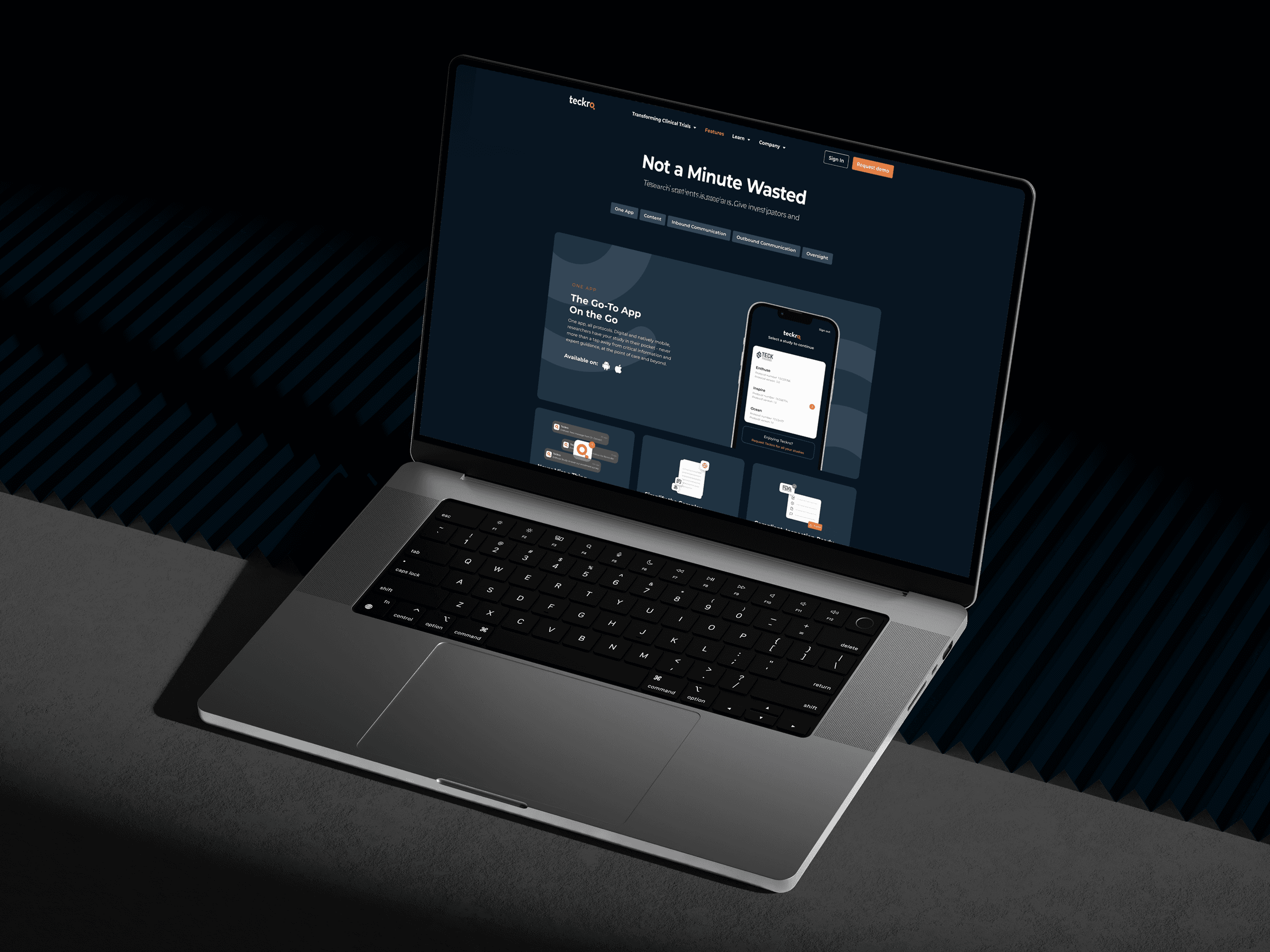
We relaunched Teckro's website and migrated Sanity v2 to v3 in eight weeks, moving them onto Next.js and Vercel with Wistia video managed from the Studio.
We gave Key ESG a fast Next.js and Sanity site with a page builder, a Chakra UI design system, and a Sanity form builder wired straight into their CRM.

We built Topaz Labs a documentation platform with Sanity, Next.js and Vercel: live preview, custom fields, and one of the fastest docs sites anywhere.

What we've shipped on Vercel's eve so far: our content-ops agent, how each part of it works, and the things we learned as a team putting an agent framework into real use.


How we built Satoru, a sandboxed background coding agent powered by Cloudflare Durable Objects and Modal to handle retainer backlogs across client codebases.




Cache Components go recommended, ensureStatic locks routes static, and next upgrade --agent hands the bump to your agent. We upgraded the day it dropped.

We build fast, type-safe websites engineered for SEO, AEO and conversion. Your AI agent ships landing pages on the rails. Bring v0, Lovable, Cursor, Replit or Codex.

Sanity CMS development agency for teams shipping content at scale. Preferred Sanity partner, community ambassadors and authors of Turbo Start Sanity. We build studios, migrate from WordPress and Strapi, and tune Sanity so editors actually want to use it.

Vercel agency partners building serious Next.js apps: dashboards, AI products, content platforms and hybrid SaaS surfaces.
Work with us