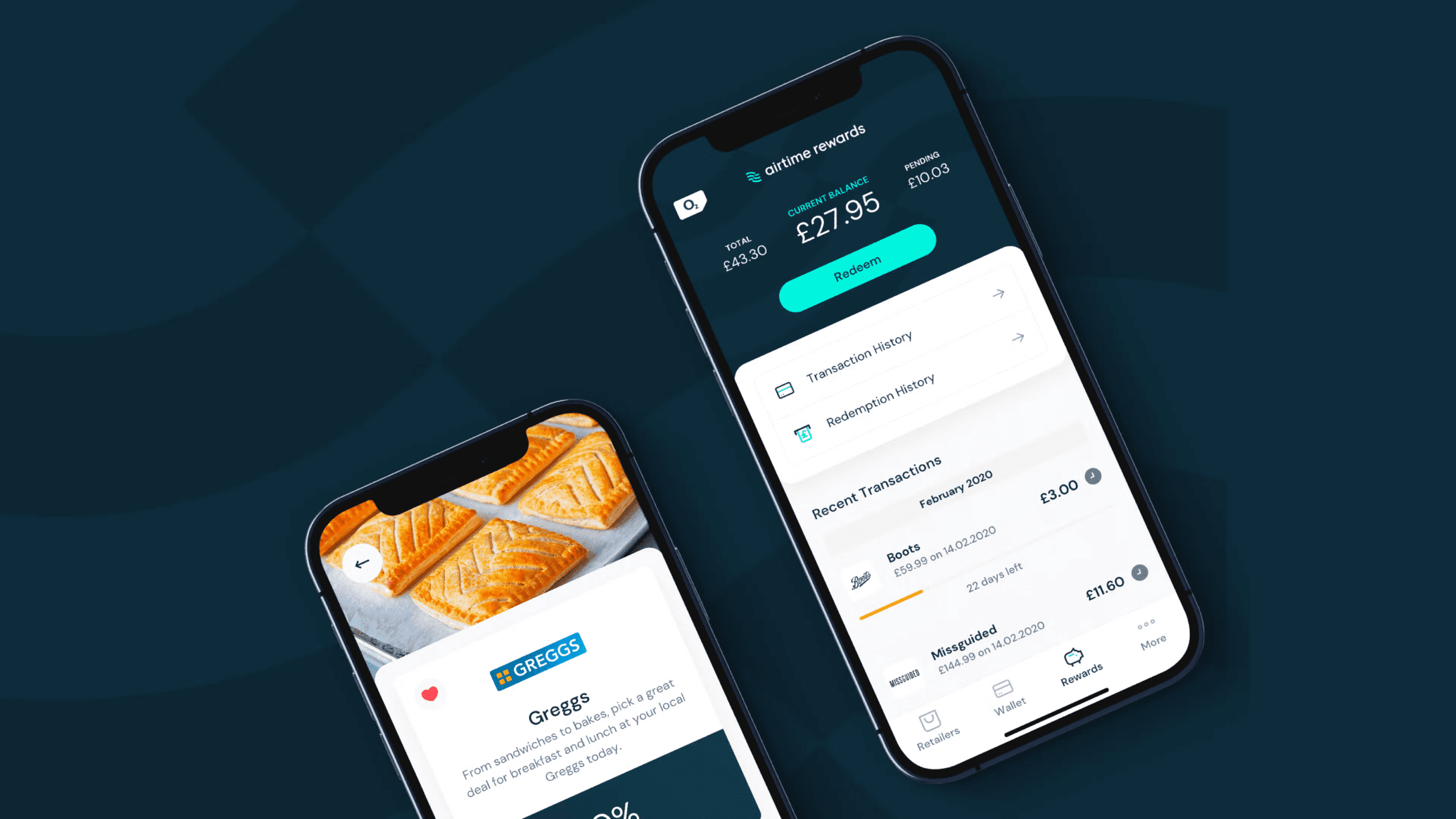
Airtime Rewards
We built cashback platform Airtime Rewards a Gatsby site on Netlify: 0.4s First Contentful Paint, 0.6s to interactive, and perfect Lighthouse scores.
View case study
We've built Sanity and Next.js platforms for mortgage brokers, rewards programs, and AI banking tools. Fintech content changes constantly and gets reviewed heavily, so we set up editorial workflows where marketing can ship pages themselves and every change stays traceable.
Fintech marketing teams arrive with the same bottleneck in different shapes. The roadmap sits with marketing, the deploy pipeline sits with engineering, and every landing page has to cross between the two.
For LiveMore Mortgages we built a modular page builder in Sanity: drag-and-drop content blocks, SEO settings on each component, and Sanity image optimization with hotspot controls, so a campaign page gets assembled by the people writing it. Mortgage Rob sits at the other end of the scale, a sole broker who wanted to keep editing his own site, so the Sanity setup is shaped around one person and shows him how copy, FAQ answers and blog posts will land before anything publishes.
Airtime Rewards needed a marketing site that could carry a cashback platform past a million users. Tabby AI needed the component library underneath every surface they ship, built for right-to-left layouts and accessibility from the first commit rather than retrofitted after launch.
Sanity and Next.js on Vercel is the default pairing, and most fintech work here uses it: Sanity for structured content the marketing team owns, Next.js for rendering, Vercel for preview deployments on every change.
It is not the only answer. Airtime Rewards runs on Gatsby and Netlify, with lazy-loaded imagery and Netlify's caching and asset optimization doing most of the performance work. Mojo Mortgages already had a Gatsby foundation and content split across two separate headless systems, so we built on what was there instead of forcing a consolidation into a four-week window.
Where a fintech brand ships across several markets, the component library becomes the main deliverable. Tabby AI's library was documented and tested component by component in Storybook, so their designers and our engineers worked against the same reference and their internal team could keep extending it after handover.
These are numbers from the projects above rather than industry averages.
LiveMore's landing page creation went from weeks to hours, updates went live five times faster, and their marketing team launched 12 new campaign pages in the first month with no developer involved.
Airtime Rewards hit 0.4 seconds to First Contentful Paint and 0.6 seconds to interactive, with a perfect 100 across all four Google Lighthouse audits: performance, accessibility, best practices and SEO. The platform passed a million users after launch.
Mojo Mortgages had a fixed four-week window before their RVU acquisition announcement. Four mortgage landing pages launched on schedule, their Product Owner called them lightning fast, and the work was immediately extended to four more subpages on the same architecture.
Tabby AI's move from Sanity v2 to v3 was used to rebuild the schemas around reusable structures, so content is created once and surfaced across their site and their apps instead of being duplicated per surface.
Financial copy gets reviewed, and the review is usually the slow part. It gets slower when nobody can say who signs off or where the latest version lives, so the first thing we set up is a review workflow with named steps and a named approver.
The workflow runs in four steps in Sanity. Marketing drafts the page or the change. The reviewer opens the real preview, the page as it will look on the live site, not a staging link that drifts from production. Your compliance or legal reviewer approves it. Then it publishes, or goes into a scheduled release for a launch date.
Who approves is your call, not ours. Usually marketing writes and compliance or legal signs off, and we never approve financial copy on a client's behalf. Where the person drafting and the person approving need separate permissions, Sanity Enterprise adds custom roles for exactly that split. On the Growth plan, the built-in Contributor role already covers the basic split: it can write drafts but cannot publish.
Structure keeps each review small. When a rate, a disclaimer or a product description is a field rather than text baked into a page, it is approved once and every page carrying it updates with it. Version history comes with Sanity rather than being bolted on, so there is a record of who changed what and when.
The case studies above each show part of this. LiveMore Mortgages shows marketing owning page builds, with 12 campaign pages launched in the first month and no developer involved. Mortgage Rob shows preview before publish: he sees how copy, FAQ answers and blog posts will land before anything goes live. Mojo Mortgages shows the work landing on a fixed date, four pages inside four weeks before the RVU acquisition announcement. Airtime Rewards shows the finished site holding up: a perfect 100 on all four Lighthouse audits, and past a million users since launch. For teams operating across markets, internationalization and accessibility belong in the component library from the start, which is how we approached Tabby AI's build for the UAE.
Roboto Studio moves marketing sites off WordPress onto Sanity and Next.js. For a fintech team, WordPress brings the problems a compliance team cares about: a public admin login, server-side plugins that each need patching, and disclaimers pasted into page templates, where one wording change means editing every page that carries it.
A headless build removes most of that surface. Next.js pages are served from a CDN, the CMS is a hosted service with no server-side plugins to patch, and every rate, disclaimer and product description becomes a field with its own history. WordPress also runs on PHP, so a runtime flaw like PHP2Shell, which CISA listed as exploited in October 2026, exposes the pages, the admin and every plugin at once.
The move itself is where rankings get lost, so we run it the same way on every migration. Every URL is mapped to its new home before launch, the 301 redirects ship on launch day, and we watch Search Console through the cutover. Slingshot Bio's WordPress marketing site came across this way, with its search equity intact.
We built cashback platform Airtime Rewards a Gatsby site on Netlify: 0.4s First Contentful Paint, 0.6s to interactive, and perfect Lighthouse scores.

We built Livemore Mortgages a modular page builder with Sanity and Next.js. Landing pages that took weeks now ship in hours, and updates go live 5x faster.

Mojo Mortgages needed a redesign shipped in four weeks. We rebuilt their frontend and four mortgage landing pages on Gatsby across two headless CMSs.

Helping the UAE's most prolific Pay in 4 merchants scale their design system and composable infrastructure.

We built mortgage broker Rob a Sanity and Next.js site he edits himself, with a branded share card on every article and a booking flow that turns readers into calls.

What an AI visibility audit checks on a B2B SaaS site, and the loop that follows: watch citations, draft fixes, and ship them.


Seven headless CMS agencies compared by fit, with sourced budget ranges and how to choose one. We're on the list, and we say so up front.

A dated Sanity vs Contentful comparison for US marketing teams: content modeling, editors, queries, preview, locales, pricing, limits, and when each wins.


Headless CMS development agency for content teams operating at scale. We model structured content, build on Sanity and Contentful with Next.js frontends, and run migrations that keep your URLs and rankings intact.

Sanity CMS development agency for teams shipping content at scale. Preferred Sanity partner, community ambassadors and authors of Turbo Start Sanity. We build studios, migrate from WordPress and Strapi, and tune Sanity so editors actually want to use it.

Vercel agency partners building serious Next.js apps: dashboards, AI products, content platforms and hybrid SaaS surfaces.
Work with us