
Slingshot Bio
Roboto converged Slingshot Bio's WordPress and Shopify sites into one headless Shopify build on Next.js and Sanity, instrumented end to end and AI-ready.
View case study
Biotech and clinical research teams publish dense, heavily reviewed content: pipelines, publications, trial updates. We build Sanity and Next.js platforms that give scientific teams a clear editorial workflow, so reviewed content goes live accurately and on time.
Biotech and clinical research teams publish dense, heavily reviewed content: pipelines, publications, trial updates, product specifications that have to be exactly right. The build has to make accuracy easy and review fast, in that order.
Slingshot Bio had a WordPress marketing site on one domain and a separate Shopify store on another. We converged them into a single headless Shopify build on Next.js and Sanity in three months from design through to launch, with Shopify reduced to checkout and nothing else. Every product is structured data in Sanity rather than a hand-built page, covering markers, reactivity, pack sizes, application notes and certificates of analysis, so spec sheets, panels and reactivity all render from one source and the team publishes a new product or COA on its own.
Teckro needed a full website relaunch and a Sanity v2 to v3 migration in eight weeks, which we delivered together so the technical debt was cleared rather than carried across.
Sanity and Next.js on Vercel is the pairing, with Shopify added where there is a catalog to sell. Slingshot Bio's build started from turbo-start-shopify, our open-source Shopify and Sanity starter, which is also why the full catalog keeps filtering instantly as new families and markers are added.
The integrations tend to matter more here than the rendering. Teckro's video and podcast content comes from Wistia, which updates Sanity Studio directly so there is one source of truth. Wistia's API did not expose transcripts, so we built a scraper to pull them as HTML. Their editors also pick a HubSpot form from inside Sanity Studio, with submissions flowing straight into their CRM, built from the API up because no simplified plugin existed at the time.
Measurement is part of the stack on these projects. Slingshot Bio's entire path is instrumented in PostHog with identity stitched across the headless boundary, so one session is traceable from first landing to a completed Shopify checkout even though checkout sits on a separate domain.
Slingshot Bio went from two sites on two domains to one platform in three months, and search equity carried across. We inventoried every page and resource on both old sites, mapped each to its new home, and built a custom Shopify theme whose only job is redirects.
The site launched AI-ready as well, with JSON-LD on every product, collection and resource, content negotiation serving clean Markdown to AI crawlers, an llms.txt and a Markdown sitemap, all staying current without maintenance.
Teckro's relaunch and CMS migration shipped inside the eight-week window on Next.js and Vercel. The editorial side gained dedicated event document types and Portable Text for embedded calls to action, so content creation got faster and the CTAs inside articles drove conversions. Media is optimized on the fly, so images are sized for loading speed automatically rather than depending on editors to prepare them correctly.
Three constraints come up on nearly every life sciences project, and none of them are solved by a faster front end.
The first is review. Content goes through scientific and regulatory sign-off, so it needs preview that shows the real page and a version history that records who changed what. Structuring a product as fields rather than prose is what lets a specification be corrected once and propagate to every spec sheet and panel that references it.
The second is procurement. Lab purchases need approval, so a standard cart is the wrong shape. Slingshot Bio's researchers turn a basket into an itemized, branded PDF to send to a principal investigator or procurement, and the cart holds for weeks so they can come back and check out once it is approved.
The third is finding out where things stall. Slingshot Bio's funnel is instrumented end to end with session replay on top, so a path that loses researchers between a resource page and a completed order is visible rather than guessed at.
Roboto converged Slingshot Bio's WordPress and Shopify sites into one headless Shopify build on Next.js and Sanity, instrumented end to end and AI-ready.
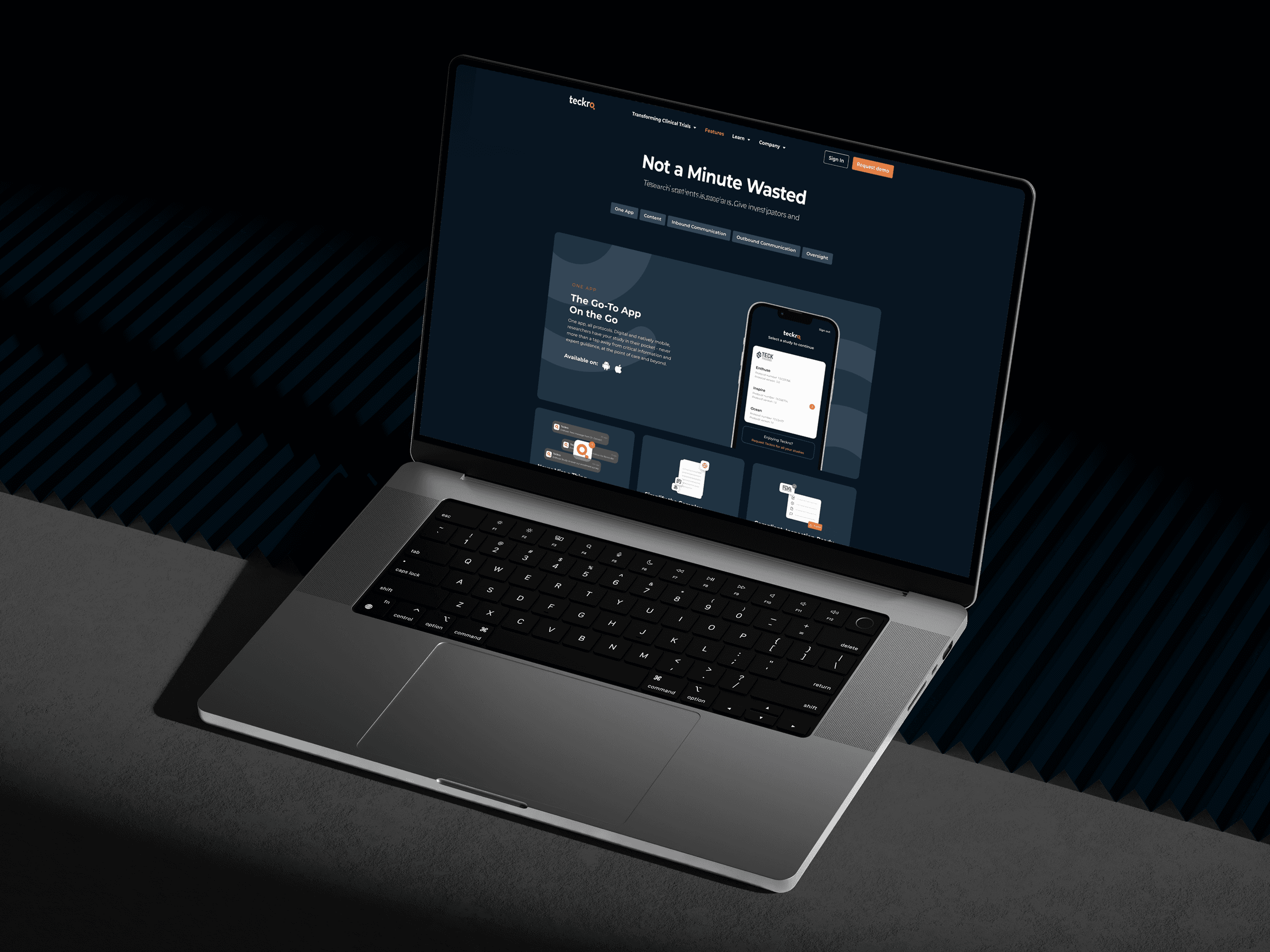
We relaunched Teckro's website and migrated Sanity v2 to v3 in eight weeks, moving them onto Next.js and Vercel with Wistia video managed from the Studio.

Seven headless CMS agencies compared by fit, with sourced budget ranges and how to choose one. We're on the list, and we say so up front.


A dated Sanity vs Contentful comparison for US marketing teams: content modeling, editors, queries, preview, locales, pricing, limits, and when each wins.


PHP2Shell is a 9.2-rated PHP flaw, and WordPress runs on PHP. Why we'd pick a headless CMS on Next.js, and what to patch this week.

Headless CMS development agency for content teams operating at scale. We model structured content, build on Sanity and Contentful with Next.js frontends, and run migrations that keep your URLs and rankings intact.

Sanity CMS development agency for teams shipping content at scale. Preferred Sanity partner, community ambassadors and authors of Turbo Start Sanity. We build studios, migrate from WordPress and Strapi, and tune Sanity so editors actually want to use it.

Vercel agency partners building serious Next.js apps: dashboards, AI products, content platforms and hybrid SaaS surfaces.
Work with us