Slingshot Bio
Roboto converged Slingshot Bio's WordPress and Shopify sites into one headless Shopify build on Next.js and Sanity, instrumented end to end and AI-ready.
View case study


From Directus to Storyblok
Last verified:
The process
First we check the existing Directus and see whether the data is clean enough to move straight over to Storyblok, and plan around any auth walls or bot protection in the way.
Then we work out how Directus renders its pages and pull the content out, even without CMS access.
Everything extracted runs through our sanitization pipeline, which flags slop, normalizes structure, and leaves us clean content to work with.
Before anything moves, we agree the Storyblok content model with you, shaped around how your editors actually work.
We transform the content to the agreed schema and run a full dry run, so mappings and edge cases prove out before production.
Once the dry run is clean, everything moves into Storyblok in one controlled cutover.
Every old URL gets mapped to its new home with the right redirect, so rankings and link equity survive the move.
Finally, automated browsers sweep the new site for data issues, design regressions, and missing SEO signals.
Key pain points
Directus looks fantastic in demos, but things get rocky once you actually try to use it at scale. The Team cloud plan is $499/month (or $599 billed monthly) and caps you at 10 SSO seats, 50 collections, and 20 flows. Grow past those limits and you're straight into custom Enterprise territory. The v12 move to the Monospace Sustainable Core License (MSCL) has also rattled the community; smaller orgs get a free Innovation Grant, but larger teams are navigating a licensing landscape that changed significantly from what they signed up for.
On the dev side, updates can introduce breaking changes, the documentation doesn't always keep pace, and the extension ecosystem is pretty thin. Localization is technically supported but fiddly and easy to misconfigure, and large datasets make the UI noticeably sluggish. And if you want anything deeply custom, you're suddenly living in Vue.js land, which is not where most teams want to spend their weekends.

Breaking update changes
Directus explicitly does not follow semver: any release may include breaking changes. The v10 to v11 upgrade hit schema changes and dropped fields, and the v11 UI scale change (px to rem) broke extensions hardcoding pixel values. Plan your upgrade windows carefully.

Limited extension ecosystem
The plugin ecosystem is still pretty bare. Anything even mildly niche ends up becoming a "let's just custom build it" moment, which defeats the purpose of picking a CMS with extensions. The marketplace launched in beta in early 2024 and is still maturing.

Complex localization setup
Yes, it supports multilingual content, but setting it up feels like assembling IKEA furniture blindfolded. It works, but expect extra config, extra steps, and extra patience.
Version history still tier-gated
Global draft versions now ship automatically with every versioned item (no manual setup required as of March 2026), which is a genuine improvement. Full version history, rollbacks, and controlled releases are still locked behind higher-tier plans, though, so if predictable publishing workflows are a must, check your tier carefully before committing.
Vue.js knowledge requirement
Custom interfaces and deeper tweaks need Vue.js, so if your team only speaks React, prepare for a small identity crisis (or a hiring plan).
Large dataset performance issues
Heavy tables and deeply relational data can slow down queries and the UI: community reports show 25K-row datasets where raw SQL runs in milliseconds but the Directus API takes 20+ seconds, largely due to internal query overhead and no auto-indexes on foreign keys.
Key advantages
If you've ever tried explaining "headless" to a content team and watched their eyes glaze over, Storyblok is your peace offering. The visual editor is genuinely good: editors see changes on the real page preview instead of filling out abstract field forms.
That's the upside. The downside is that the API lacks a few basics, like fetching child or sibling pages directly, and the tier jumps get steep once you need more locales or seats. If Storyblok is your choice, we can make it work, we know where the rough edges are and how to set it up cleanly.
Visual editing capabilities
Yes, you read that right, you can do real-time, on-page editing. Make a change, see it instantly, no staging limbo, which means you can stop "guess and publish."
Component-based approach
You can build a component once and use it everywhere. You can also update a button or banner in one place, and the entire site fixes itself.
Efficient content structuring
Your content stays clean, organized, reusable, and not scattered across 40 pages. Developers work with structured data, editors drag-and-drop pieces like Lego. Everyone gets to stay sane.
Strong multi-language support
One CMS, many languages, no chaos. Localize content without duplicate pages or messy spreadsheet exports.
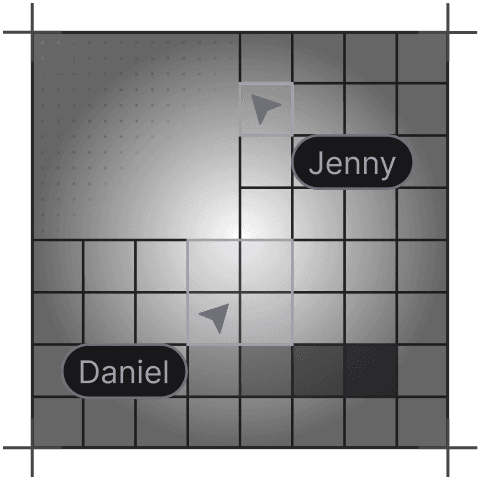
Collaborative environment
Writers, designers, and editors can all jump in at the same time without breaking each other’s work. Add comments and approvals. View version histories for teamwork without the headache.
Highly customizable
If your design system can imagine it, you can use Storyblok to model it. There are custom fields, workflows, and logics that can bend to your stack rather than the other way around.
Tell us what you're building. We reply within one working day. Jono or someone on the team picks up every message personally.
Join the growing list of successful migrations