WordPress logo
Uniform logo

From WordPress to Uniform

We are the WordPress to Uniform migration experts

Last verified:


Challenges with WordPress

Key pain points

Talking trash about WordPress is therapy at this point. We've had to build it for years, and it's consistently awful. I guarantee that if you have used it for long enough, you've experienced a site-breaking PHP error or been locked out of your admin panel due to a faulty plugin. We know the world of horrors, and we regret adding to that 40% of the web. Yes, it really makes up 40% of the web.
Help me migrate


WordPress security vulnerabilities

Potential security vulnerabilities

When you power half the internet, the hackers notice. WordPress stays safe, but only if someone is constantly updating, patching, and watching it like a hawk, which, trust us, you don't want to.
Heavy reliance on plugins

Heavy reliance on plugins

If you want any new feature, install a new plugin. Before you know it, your site is held together by 27 plugins and a prayer that none of those plugins are removed from the market.
Compatibility issues

Compatibility issues

Themes, plugins, and core updates sometimes play nicely together, leading to surprise breakages and debugging sessions you didn’t plan for.
WordPress maintainance challenges

Maintenance takes time

WordPress doesn’t run itself. You have to run backups, security patches, plugin conflicts, and random errors. Someone has to tuck it in at night.
WordPress performance needs tuning

Performance needs tuning

WordPress sites need caching, CDN, and database optimization to stay fast, especially if you plan to scale.
Requires careful management - Contentful

Customization has limits

You think you can do a lot with themes and plugins, but when it comes to custom experiences, it means custom dev work (or going headless entirely).


Benefits of Uniform

Key advantages

Uniform positions itself as a “composable DXP,” which is enterprise-speak for “it does a bit of everything on top of your actual CMS.” To be fair, the visual workspace is genuinely useful. Marketers get drag-and-drop control, personalization, and A/B testing without pinging developers every five minutes. And if you’re already juggling multiple systems (CMS, commerce, DAM), the orchestration layer can tidy up the chaos.

That said… we’ll be honest, we don’t really build with DXPs like this anymore. Whenever a headless tool starts shouting “DXP” from the homepage, it usually means heavyweight architecture, unnecessary complexity, and a bill only Fortune 500 companies would smile at. If you’re considering it anyway, feel free to get in touch. We’ll happily walk you through better, modern alternatives before you sink a quarter’s budget into something you probably don’t need.

Start my migration


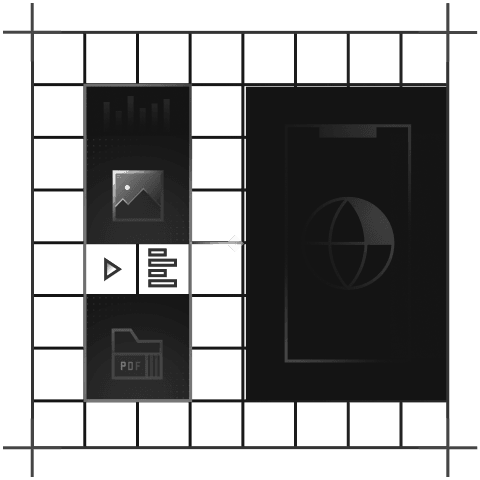
Dark UI wireframe on a grid with a left panel of icons and a right panel of content blocks and a progress bar, connected by an arrow.

Visual experience composition

Uniform’s visual builder lets marketers piece together pages without pinging developers every 5 minutes. It’s basically a drag-and-drop layer on top of your headless stack.
Multi-source content federation

Multi-source content federation

Uniform pulls content from multiple CMSs, DAMs, and commerce tools into one interface, so you don’t need 10 tabs open to build a single page
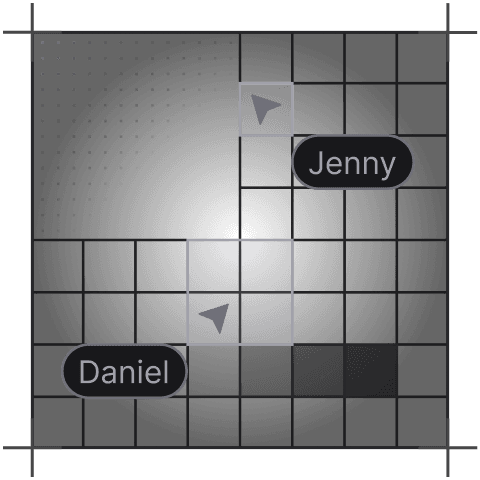
Real-time collaboration tools

Real-time collaboration tools

Teams can edit, plan, and experiment together without overwriting each other’s work. It’s built for big organisations where ten people touching the same page is a weekly occurrence.

Grid with a central lightning bolt icon, a surrounding dotted effect, and black areas in opposite corners.

Enterprise-grade scalability

Uniform is built to handle traffic spikes and heavy personalisation workloads. It’s overkill for small sites but a safe bet for enterprises terrified of a Black Friday outage.
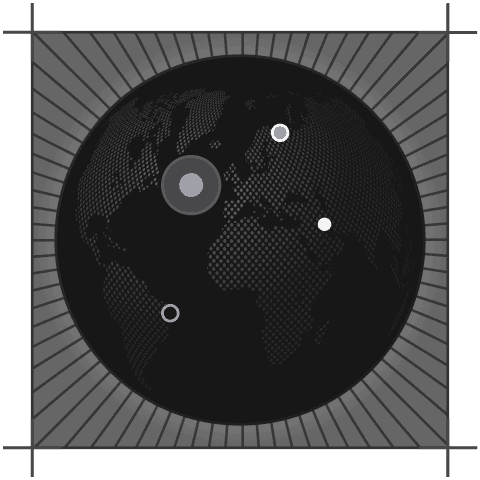
Dark gray, dotted globe with a large marker over Europe and three smaller markers.

Omnichannel content management

You can pipe the same content across web, apps, and any other channel marketing dreams up. Useful for brands juggling multiple experiences without wanting to rebuild the same page three times.

Built-in A/B testing

Built-in A/B testing

Uniform ships with native testing and targeting, so teams can experiment without gluing together half a dozen tools. It’s marketer-friendly and fast.


Common questions

WordPress to Uniform migration FAQs

Answers to the most common questions about WordPress to Uniform migration

What are the best WordPress alternatives?
It depends on what you're building. For marketing sites, Webflow or Framer will get you further with less pain. For content-heavy projects that need a headless CMS, Sanity is our go-to recommendation. It gives developers full control over the frontend while editors get a clean, modern interface. If you're a developer looking for alternatives specifically, Next.js paired with Sanity or even a static site generator will outperform WordPress on speed, security, and developer experience.
How much does WordPress cost per month?
WordPress.org itself is free, but hosting, themes, premium plugins, and maintenance add up quickly. A basic setup on SiteGround runs about $3-15/month for hosting. Add a premium theme ($50-200 one-time), a few paid plugins ($100-500/year), and a security solution. Realistically, you're looking at $30-100/month for a properly maintained small business site. WordPress.com's managed plans run $4/month (Personal) to $45/month (Commerce) on annual billing, and plugin installs only unlock on the Business plan and above at $25/month. WordPress.com Enterprise starts at $25,000/year.
How do I migrate from WordPress to a headless CMS?
We start by exporting your WordPress content using WP's REST API or a database export, then restructure it for the target CMS. Posts, pages, categories, tags, media, and custom fields all get mapped to the new schema. The frontend gets rebuilt in a modern framework like Next.js. The whole process usually takes 3-6 weeks depending on how many custom post types and plugins you have. We've done this migration enough times to have solid tooling for it.
What are the best WordPress alternatives for developers?
If you're a developer tired of PHP and plugin conflicts, look at headless CMS options paired with a frontend framework. Sanity with Next.js is our top pick. You get TypeScript, version control for your content schema, and a frontend you actually enjoy working with. Strapi is another option if you want self-hosted and open-source. For simple sites, Astro with markdown content is surprisingly powerful and deploys anywhere.
Is it worth migrating away from WordPress?
For most teams we work with, yes. The maintenance burden alone costs more than people realize. Between plugin updates, security patches, performance tuning, and the occasional site-breaking PHP error, WordPress demands constant attention. Modern alternatives give you better performance, stronger security by default, and a developer experience that doesn't feel like 2010. The migration itself is an investment, but the reduced ongoing costs and improved site speed usually pay for it within 6-12 months.
How do we migrate away from Uniform?
Uniform is an orchestration layer, not a traditional CMS, so migration means detangling it from the systems it sits on top of. Your actual content likely lives in a separate CMS, DAM, or commerce platform. The Uniform-specific parts, including composition layouts, personalisation rules, and A/B test configurations, need to be rebuilt in your target platform or replaced with dedicated tools. We typically spend 2 to 4 weeks on Uniform-specific teardown, on top of whatever migration the underlying content sources require.
Why do teams leave Uniform?
The price-to-value ratio is the most common complaint. Uniform's enterprise pricing is steep, and teams find they're paying premium rates for an abstraction layer that adds complexity rather than removing it. The learning curve is real. Teams consistently need weeks of onboarding to become productive, and the orchestration model introduces debugging overhead that frustrates both developers and content editors. When the contract comes up for renewal, many teams conclude they'd be better served by a simpler architecture.
Do we actually need a DXP like Uniform?
Probably not. We've worked with teams that adopted Uniform because they were managing content across 4 or 5 different systems and wanted a single editing interface. In practice, most of those teams would have been better off consolidating into one strong headless CMS and using it as the single source of truth. The "composable DXP" pitch sounds good in a sales deck, but it often means you're paying enterprise prices to glue together tools that could be replaced by a cleaner architecture. We're happy to audit your stack and give you an honest answer.


Get in touch

Fill out the form below and we'll get back to you