
Slingshot Bio
Roboto converged Slingshot Bio's WordPress and Shopify sites into one headless Shopify build on Next.js and Sanity, instrumented end to end and AI-ready.
View case study


From WordPress to Joomla
Last verified:
The process
First we check the existing WordPress and see whether the data is clean enough to move straight over to Joomla, and plan around any auth walls or bot protection in the way.
Then we work out how WordPress renders its pages and pull the content out, even without CMS access.
Everything extracted runs through our sanitization pipeline, which flags slop, normalizes structure, and leaves us clean content to work with.
Before anything moves, we agree the Joomla content model with you, shaped around how your editors actually work.
We transform the content to the agreed schema and run a full dry run, so mappings and edge cases prove out before production.
Once the dry run is clean, everything moves into Joomla in one controlled cutover.
Every old URL gets mapped to its new home with the right redirect, so rankings and link equity survive the move.
Finally, automated browsers sweep the new site for data issues, design regressions, and missing SEO signals.
Key pain points
Talking trash about WordPress is therapy at this point. We've had to build it for years, and it's consistently awful. I guarantee that if you have used it for long enough, you've experienced a site-breaking PHP error or been locked out of your admin panel due to a faulty plugin. We know the world of horrors, and we regret adding to that share of the web. Yes, it really does power over 40% of all sites, roughly 41.5% at the last count.
Potential security vulnerabilities
When you power half the internet, the hackers notice. WordPress stays safe, but only if someone is constantly updating, patching, and watching it like a hawk, which, trust us, you don't want to.
Heavy reliance on plugins
If you want any new feature, install a new plugin. Before you know it, your site is held together by 27 plugins and a prayer that none of those plugins are removed from the market.
Compatibility issues
Themes, plugins, and core updates sometimes play nicely together, leading to surprise breakages and debugging sessions you didn’t plan for.
Maintenance takes time
WordPress doesn’t run itself. You have to run backups, security patches, plugin conflicts, and random errors. Someone has to tuck it in at night.
Performance needs tuning
WordPress sites need caching, CDN, and database optimization to stay fast, especially if you plan to scale.
Customization has limits
You think you can do a lot with themes and plugins, but when it comes to custom experiences, it means custom dev work (or going headless entirely).
Key advantages
Recommending Joomla in 2026 feels a bit like recommending Internet Explorer. But if you must use it, it does earn a few real points. The multilingual support is built in, so you run a five-language site without a pile of plugins. The access-control system is more detailed than most enterprise platforms, and the modular structure gives developers room to build complex, multi-section sites. If you have a big editorial team that needs genuinely granular permissions, Joomla holds up.
If you are set on Joomla and we cannot talk you out of it, we will point you to an agency that still happily ships heavy old templates. Or sit down with us for half an hour, and we will at least make sure you do not regret the journey.

Native multilingual support
Joomla ships with multilingual features baked in, so you don’t need a plugin graveyard just to run a site in five languages. It handles translations cleanly and is one of the few CMS platforms that gets this right out of the box.
Granular user permission system
Its ACL system is its biggest bragging right. You can lock down roles, workflows, and access rules with a level of control that most CMS platforms still envy.
Custom field capabilities
Joomla gives you solid flexibility with custom fields, letting you shape structured content without hacking together a dozen extensions. It’s powerful enough for complex layouts and multi-section content.
Active developer community
The community isn’t massive, but the people who are there are dedicated, technical, and still shipping useful extensions and documentation. If you're deep in Joomla land, it’s a lifeline.
Strong security foundation
Kept patched, Joomla is stable and the core team takes security seriously, with regular updates. The catch is the "kept patched" part. The 2026 JCE editor exploit hit sites that fell behind, so the upkeep is on you.
Modular architecture flexibility
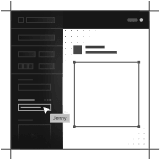
Its module-based layout system lets you build multi-section portals, dashboards, and content-heavy sites without bending the platform backward. If you know what you're doing, it’s flexible enough to scale.
Tell us what you're building. We reply within one working day. Jono or someone on the team picks up every message personally.
Join the growing list of successful migrations