Case study
View case studyJamb
We rebuilt Jamb on Sanity and Next.js, merging two legacy PHP sites into one calm catalogue without losing the SEO equity their antique and reproduction collections had built up.



From Webflow to Uniform
Last verified:
Key pain points
Now for the part Webflow doesn't put on their homepage. Pricing escalates fast. The $23/month CMS plan sounds reasonable until you pass 2,000 items and get forced onto the $39/month Business plan, and enterprise contracts run $60,000+ a year for high-traffic sites. The CMS editor is the other pain point everyone loves to hate. Tiny text fields, awkward formatting, and the occasional "why did hitting save unpublish my article?" moment. Not the confidence you want from a content platform.
Then there are the technical walls. Only one designer can edit the canvas at a time. Reference fields have shallow depth. CMS reference limits force strange workarounds for anything resembling real relational content. And if you ever want to leave Webflow, the exported code drops CMS content, interactions, and animations, so your "no-code" site suddenly needs code everywhere.

Expensive pricing tiers
Webflow starts cheap, but the moment you need CMS items, traffic, or team features, the bill jumps fast. If you want just 10 pages, go ahead. But if you need an enterprise website, we suggest reconsidering.
Outdated CMS editor interface
For all the design polish, the CMS editor feels stuck in another decade. Tiny text fields, formatting quirks, and the occasional “why did that unpublish my live page?” moment doesn't help content teams move fast.
CMS reference limitations
Complex content models often require hacks, workarounds, or custom code anyway, which defeats the “no-code” dream. It doesn't have repeaters or shallow reference depth, and collection limits add friction to what should be simple tasks.
Single-designer collaboration limit
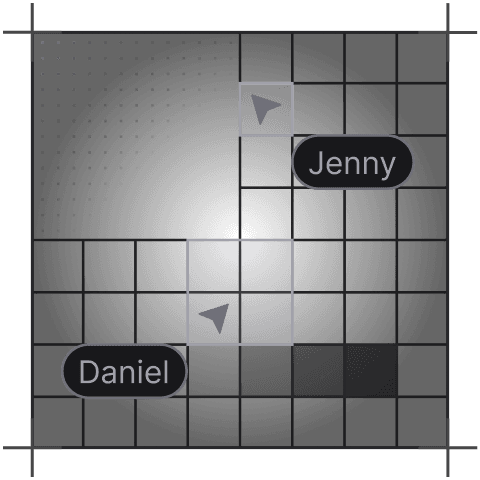
Only one designer can work in the Webflow canvas at a time. On larger projects, this turns teamwork into a queue.
Third-party integration dependency
If you need advanced features, prepare to stitch in custom code or third-party services. The plugin ecosystem is small, so extending Webflow usually means bolting on tools outside the platform.
Limited export functionality
You can export your site, but you lose CMS features, interactions, and animations the moment you do. It’s more like a one-way door than a portable build.
Key advantages
Uniform positions itself as a “composable DXP,” which is enterprise-speak for “it does a bit of everything on top of your actual CMS.” To be fair, the visual workspace is genuinely useful. Marketers get drag-and-drop control, personalization, and A/B testing without pinging developers every five minutes. And if you’re already juggling multiple systems (CMS, commerce, DAM), the orchestration layer can tidy up the chaos.
That said… we’ll be honest, we don’t really build with DXPs like this anymore. Whenever a headless tool starts shouting “DXP” from the homepage, it usually means heavyweight architecture, unnecessary complexity, and a bill only Fortune 500 companies would smile at. If you’re considering it anyway, feel free to get in touch. We’ll happily walk you through better, modern alternatives before you sink a quarter’s budget into something you probably don’t need.
Visual experience composition
Uniform’s visual builder lets marketers piece together pages without pinging developers every 5 minutes. It’s basically a drag-and-drop layer on top of your headless stack.
Multi-source content federation
Uniform pulls content from multiple CMSs, DAMs, and commerce tools into one interface, so you don’t need 10 tabs open to build a single page
Real-time collaboration tools
Teams can edit, plan, and experiment together without overwriting each other’s work. It’s built for big organisations where ten people touching the same page is a weekly occurrence.
Enterprise-grade scalability
Uniform is built to handle traffic spikes and heavy personalisation workloads. It’s overkill for small sites but a safe bet for enterprises terrified of a Black Friday outage.
Omnichannel content management
You can pipe the same content across web, apps, and any other channel marketing dreams up. Useful for brands juggling multiple experiences without wanting to rebuild the same page three times.
Built-in A/B testing
Uniform ships with native testing and targeting, so teams can experiment without gluing together half a dozen tools. It’s marketer-friendly and fast.
Tell us what you're building. We reply within one working day — Jono or someone on the team picks up every message personally.
Join the growing list of successful migrations