Slingshot Bio
Roboto converged Slingshot Bio's WordPress and Shopify sites into one headless Shopify build on Next.js and Sanity, instrumented end to end and AI-ready.
View case study


From Webflow to KeystoneJS
Last verified:
The process
First we check the existing Webflow and see whether the data is clean enough to move straight over to KeystoneJS, and plan around any auth walls or bot protection in the way.
Then we work out how Webflow renders its pages and pull the content out, even without CMS access.
Everything extracted runs through our sanitization pipeline, which flags slop, normalizes structure, and leaves us clean content to work with.
Before anything moves, we agree the KeystoneJS content model with you, shaped around how your editors actually work.
We transform the content to the agreed schema and run a full dry run, so mappings and edge cases prove out before production.
Once the dry run is clean, everything moves into KeystoneJS in one controlled cutover.
Every old URL gets mapped to its new home with the right redirect, so rankings and link equity survive the move.
Finally, automated browsers sweep the new site for data issues, design regressions, and missing SEO signals.
Key pain points
Now for the part Webflow doesn't put on their homepage. Pricing escalates fast. The $25/month Premium plan sounds reasonable until you stack Workspace seats and bandwidth overages on top, and enterprise contracts are custom-quoted deals that routinely land well into five figures a year for high-traffic sites. The CMS editor is the other pain point everyone loves to hate. Tiny text fields, awkward formatting, and the occasional "why did hitting save unpublish my article?" moment. Not the confidence you want from a content platform.
Then there are the technical walls. Only one designer can edit the canvas at a time. Reference fields have shallow depth. CMS reference limits force strange workarounds for anything resembling real relational content. And if you ever want to leave Webflow, the exported code drops CMS content, interactions, and animations, so your "no-code" site suddenly needs code everywhere.

Expensive pricing tiers
Webflow starts cheap, but the moment you need CMS items, traffic, or team features, the bill jumps fast. If you want just 10 pages, go ahead. But if you need an enterprise website, we suggest reconsidering.
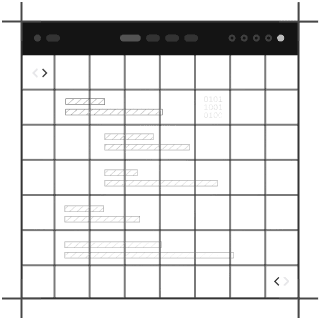
Outdated CMS editor interface
For all the design polish, the CMS editor feels stuck in another decade. Tiny text fields, formatting quirks, and the occasional "why did that unpublish my live page?" moment doesn't help content teams move fast.

CMS reference limitations
Complex content models often require hacks, workarounds, or custom code anyway, which defeats the "no-code" dream. It doesn't have repeaters or shallow reference depth, and collection limits add friction to what should be simple tasks.
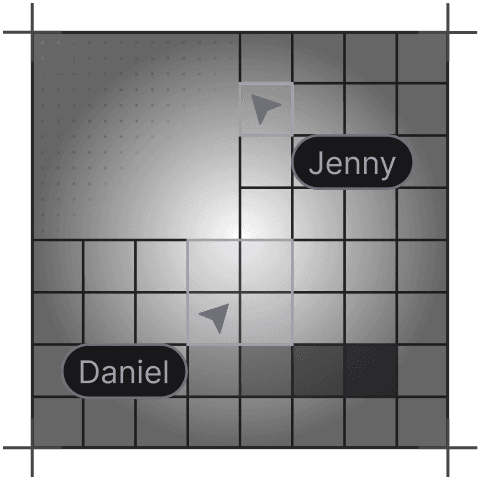
Single-designer collaboration limit
Only one designer can work in the Webflow canvas at a time. On larger projects, this turns teamwork into a queue.
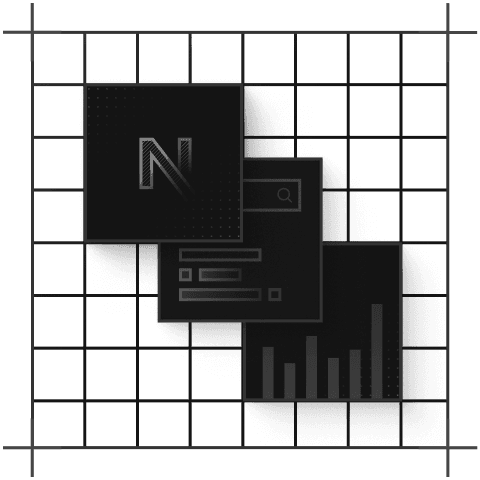
Third-party integration dependency
If you need advanced features, prepare to stitch in custom code or third-party services. The plugin ecosystem is small, so extending Webflow usually means bolting on tools outside the platform.

Limited export functionality
You can export your site, but you lose CMS features, interactions, and animations the moment you do. It’s more like a one-way door than a portable build.
Key advantages
KeystoneJS is one of those tools that really clicks if your team thinks in code. It's a schema-driven, open-source headless CMS built on Node.js, and the developer experience is genuinely good. You define your content models in TypeScript, Keystone generates a GraphQL API and an admin UI for you, and you're off. There's very little magic or abstraction hiding what's happening under the hood, which we appreciate when building complex projects for clients.
The Prisma ORM integration is a real highlight. Automatic migration generation, type-safe database access, and support for PostgreSQL, MySQL, and SQLite mean you're not fighting your data layer. If you've ever had to wrangle a CMS into supporting a non-trivial relational content model, you'll understand why this matters. Keystone lets you express those relationships cleanly and query them with a proper GraphQL API.
The document field editor is also worth mentioning. It's one of the more thoughtful rich text implementations we've seen in a headless CMS. You can embed custom React components directly into the editor, which means content teams can work with your actual design system components rather than generic blocks. For teams that care about structured content, Keystone gives you real tools to enforce it.
Where Keystone really shines is in projects where the development team wants full ownership of the stack. There's no vendor lock-in, no proprietary query language, and no surprise pricing tiers. If you want a CMS that feels like a well-designed library rather than a platform, Keystone delivers on that promise.
Schema-as-code with full TypeScript support
Define your entire content model in TypeScript with strong type inference throughout. The schema drives everything from the database to the admin UI to the GraphQL API.
Automatic GraphQL API generation
Every content type you define automatically gets a full CRUD GraphQL API with filtering, pagination, and relationship resolution. No manual endpoint wiring needed.

Prisma-powered database layer
Built on Prisma ORM with automatic migration generation and type-safe queries. Supports PostgreSQL, MySQL, and SQLite out of the box.
Flexible document field editor
The rich text editor supports custom embedded components that map to your design system, giving content editors structured authoring without sacrificing flexibility.

Granular access control
Fine-grained, field-level access control defined in code. You can write custom logic for create, read, update, and delete operations per field or per list.

Fully open source with no vendor lock-in
MIT licensed with no paid tiers or proprietary features gated behind a subscription. You own the entire stack and can host it wherever you want.
Tell us what you're building. We reply within one working day. Jono or someone on the team picks up every message personally.
Join the growing list of successful migrations