Uniform logo
Adobe Experience Manager logo

From Uniform to Adobe Experience Manager

We are the Uniform to Adobe Experience Manager migration experts

Last verified:


Challenges with Uniform

Key pain points

Uniform’s biggest problem is the price of admission. And once you're in, good luck breezing through the learning curve. Teams consistently need workshops, onboarding sessions, and a few existential crises to get comfortable with its orchestration layer.

Because it’s still a relatively young DXP, the ecosystem is thin. You won’t find the deep plugin libraries or community support you get with more established headless tools. Content teams also struggle with their mental model. Especially since the abstraction adds a layer of debugging that feels like fighting a boss battle before publishing a single page, and unless you’re on their higher tiers, expect features and limits that remind you this thing is very much built for enterprises… not anyone trying to stay under budget this decade.

Help me migrate


High enterprise pricing barrier

High enterprise pricing barrier

Uniform sits behind an aggressively enterprise paywall, making even basic usage expensive unless you're already swimming in Fortune-500 budgets.

Complex learning curve

Complex learning curve

Its whole “experience orchestration” model takes time to wrap your head around. Your team won’t be productive on day one, or even week one.
Extensive training requirements

Extensive training requirements

Marketers and developers both need onboarding and workflow retraining, which slows adoption and inflates your implementation cost.
Enterprise-tier feature limitations

Enterprise-tier feature limitations

A surprising number of essential features only unlock once you upgrade, which is frustrating when the base plan is already pricey.
Preview functionality gaps

Preview functionality gaps

Content creators won’t love the limited, indirect preview setup. It’s nowhere near as smooth as modern CMSes with first-class real-time preview.

A light gray gear-like shape with a dark center, surrounded by two concentric circles, on a dark grid background.

Integration complexity overhead

Uniform’s abstraction layer adds mental overhead and troubleshooting work when things break, especially if you're stitching together several backend systems.


Benefits of Adobe Experience Manager

Key advantages

AEM is the kind of platform you only choose if you’re a Fortune 500 company or enjoy voluntarily suffering. I hate anything Adobe builds. It’s bloated, overpriced, and aggressively designed to lock you into their ecosystem. But fine, here are the positives: the Adobe integration is unmatched. If your entire organisation already lives inside Creative Cloud, Analytics, and Target, AEM becomes this giant DXP monolith that handles assets, personalization, segmentation, and multi-channel delivery without breaking a sweat. The DAM is legitimately powerful, and it scales like a tank.

If you’re not operating at scale, you’ll spend absurd money for problems a clean Sanity + modern composable stack solves better and cheaper. If you are considering AEM or escaping it, get in touch. We’ll help you choose something that won’t haunt your ops team for the next decade.

Start my migration


Integration with Adobe tools

Integration with Adobe tools

AEM connects with Creative Cloud, Analytics, and Target, letting teams move assets, data, and personalisation logic across tools without friction
Robust digital asset management

Robust digital asset management

The DAM is genuinely powerful. It has AI tagging, smart cropping, versioning, and bulk optimisation for massive media libraries.
Consistent multi-channel delivery

Consistent multi-channel delivery

AEM can push content to web, mobile apps, email, and more from one central source. Ideal for enterprises that need consistent messaging across every customer touchpoint.

Flexible architecture

Flexible architecture

Supports both classic and headless approaches, letting teams mix legacy setups with modern frontends. It’s adaptable enough for companies with complicated stacks.

Scalable enterprise-level operations

Scalable enterprise-level operations

AEM is designed to handle huge traffic, global teams, and heavy workflows. It scales reliably when backed by proper infrastructure and Adobe’s cloud.
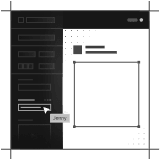
Dark UI design application showing a cursor selecting an element labeled 'Jenny' and a large blank frame.

Intuitive user interface

For an enterprise platform, the UI is relatively approachable, helping large content teams manage complex workflows without needing to touch code.


Common questions

Uniform to Adobe Experience Manager migration FAQs

Answers to the most common questions about Uniform to Adobe Experience Manager migration

How do we migrate away from Uniform?
Uniform is an orchestration layer, not a traditional CMS, so migration means detangling it from the systems it sits on top of. Your actual content likely lives in a separate CMS, DAM, or commerce platform. The Uniform-specific parts, including composition layouts, personalisation rules, and A/B test configurations, need to be rebuilt in your target platform or replaced with dedicated tools. We typically spend 2 to 4 weeks on Uniform-specific teardown, on top of whatever migration the underlying content sources require.
Why do teams leave Uniform?
The price-to-value ratio is the most common complaint. Uniform's enterprise pricing is steep, and teams find they're paying premium rates for an abstraction layer that adds complexity rather than removing it. The learning curve is real. Teams consistently need weeks of onboarding to become productive, and the orchestration model introduces debugging overhead that frustrates both developers and content editors. When the contract comes up for renewal, many teams conclude they'd be better served by a simpler architecture.
Do we actually need a DXP like Uniform?
Probably not. We've worked with teams that adopted Uniform because they were managing content across 4 or 5 different systems and wanted a single editing interface. In practice, most of those teams would have been better off consolidating into one strong headless CMS and using it as the single source of truth. The "composable DXP" pitch sounds good in a sales deck, but it often means you're paying enterprise prices to glue together tools that could be replaced by a cleaner architecture. We're happy to audit your stack and give you an honest answer.
How much does Adobe Experience Manager cost?
AEM is one of the most expensive CMS platforms on the market. Adobe doesn't publish list prices, but AEM Sites licensing typically starts around $60,000 per year on its own, and full AEM as a Cloud Service deployments usually land in the $200,000 to $300,000+ range annually. Implementation adds $500,000 to $1M, and Adobe support contracts add another 15-25% of licensing on top. We've seen companies paying more for their AEM contract than their entire engineering team's salaries. If that ratio sounds familiar, it's time to rethink the stack.
How long does it take to migrate off Adobe Experience Manager?
Plan for 4-8 months minimum for a full migration, depending on how customised your AEM instance is. The biggest bottleneck is usually content extraction. AEM's JCR (Java Content Repository) stores everything in a proprietary node structure that requires custom tooling to export cleanly. If you've built custom OSGi bundles, Sling models, or heavy DAM workflows, those all need to be rebuilt or replaced. Our approach is to run a parallel build, standing up the new stack while the old one stays live, then cutting over once everything is validated. That way editorial teams never lose a day of productivity.
Is AEM worth it for companies not using the full Adobe suite?
Honestly, no. AEM's biggest advantage is its tight integration with Creative Cloud, Analytics, Target, and the rest of the Adobe ecosystem. If you're not using at least three or four of those tools, you're paying a premium for a CMS that's slower to develop on, harder to maintain, and more expensive to staff than modern alternatives. We've worked with companies who adopted AEM because a consultant recommended it, only to discover they were using 15% of its capabilities. A well-architected headless CMS with a Next.js frontend would have cost them a fraction of the price and shipped faster.
What do you need to watch out for when leaving AEM?
Three things catch teams off guard. First, asset migration. AEM's DAM often holds thousands of assets with custom metadata, renditions, and smart crops that don't transfer automatically. Second, URL structures. AEM's dispatcher and Sling resource resolution create URL patterns that need careful redirect mapping to preserve SEO value. Third, Adobe contracts. Many AEM agreements include multi-year lock-ins with steep early termination fees. Check your contract terms before you start planning the migration timeline. We always audit all three of these before scoping any AEM migration project.


Get in touch

Fill out the form below and we'll get back to you