Storyblok logo
Magnolia logo

From Storyblok to Magnolia

We are the Storyblok to Magnolia migration experts

Last verified:


Challenges with Storyblok

Key pain points

Storyblok is not our first recommendation for a headless CMS. The product looks polished, but documentation sprawl makes initial setup harder than it should be, and non-technical editors routinely get lost navigating spaces, stories, and nested components.

Pricing is the bigger issue. Extra locales are $20/month each, extra seats are $15/month each, and custom roles, SSO, and the GraphQL API are all gated behind the custom-priced Premium and Elite plans. Teams on Growth ($99/month) often end up on Growth Plus ($349/month) not because they want the extra features, but because they hit an API request or locale limit.

You'll also lean on third-party integrations for a lot of ordinary tasks, which means more code paths to maintain. Webhook behaviour has changed between releases without clear deprecation notices. It's not a broken platform, it's just not a plug-and-play one.

Help me migrate


Customization difficulty

Customisation can take effort

Storyblok can do almost anything, but sometimes the “how” involves developer time, CLI commands, or manual tweaking. Great control, just not always plug-and-play.
Integrations is difficult

Some integrations need extra work

For things like CRMs or complex platforms, you’ll likely build the integration instead of installing it. Expect a bit more engineering.
Editing experience issues

Slower editing

Real-time previews are great, but large pages or heavy components can load slowly. Occasionally, the editor UI feels less intuitive than the rest of the platform.
Asset management challenges

Asset management isn’t perfect

Renaming assets, bulk editing, or cleaning libraries can take longer than expected. It is not streamlined like the rest of the system.
Roles permissions not customizable

Permissions are fixed

Roles are predefined. For smaller teams, that’s perfectly fine. Bigger teams may want more granular access controls than Storyblok currently offers.

Pricing issues

Pricing jumps with scale

You get a free tier, but some advanced features sit behind higher plans. It’s worth it for projects if you want to pay more; just something teams should budget for early.


Benefits of Magnolia

Key advantages

Magnolia shines if you’re the kind of organisation that genuinely needs the full DXP kitchen sink. It packs personalisation, workflows, multi-site orchestration, multilingual publishing, DAM, marketing automation hooks, and every enterprise acronym you can think of. If your teams run complex global content operations with strict governance, Magnolia’s mature permission system, stability, and long-standing enterprise reputation make it a safe, compliant option.

To be transparent, we don’t actually prefer or build with Magnolia (or any of the DXP-flavoured headless CMSs). They try to do everything, and like most jack-of-all-trades platforms, they don’t excel at the things modern teams actually need that is speed, flexibility, clean workflows, and sane pricing. We’d happily point you toward modern alternatives like Sanity that give you 10× the agility without the enterprise bloat.

Start my migration


A grid with striped blocks forming a square path around a central warning sign, with dashed arrows indicating clockwise movement.

Java-based enterprise integration

Built on Java, Magnolia plugs neatly into large enterprise stacks that already rely on Java systems and legacy infrastructure. If your organisation lives and breathes JVM, Magnolia won’t fight your architecture.

Secure, scalable architecture

Secure, scalable architecture

Magnolia’s core is engineered for high-security, high-traffic environments, with strong access control, clustering, and enterprise-grade stability. It’s built to survive heavy editorial activity and large content delivery demands.
Grayscale UI wireframe showing a left sidebar with icons and a right content panel with forms and a progress bar.

Real-time page templating

Editors can adjust components and layouts and immediately preview results, making large enterprise content operations faster and less error-prone.
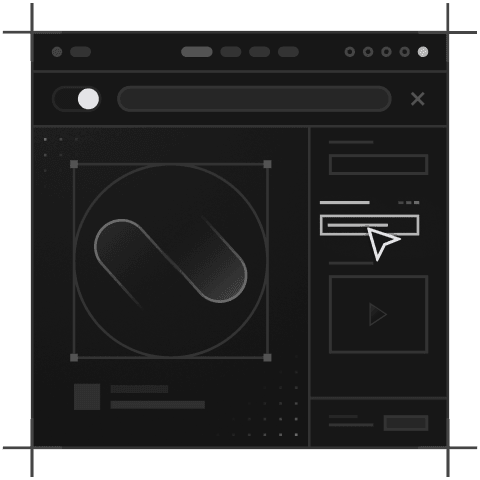
Editable component previews

Editable component previews

Magnolia’s component-level previewing gives editors clarity on how complex pages come together, reducing back-and-forth with developers and keeping multi-team workflows sane.

Multi-site management tools

Multi-site management tools

Designed for global brands, Magnolia supports multiple sites, languages, and regional variations under one roof.

Advanced workflow automation

Advanced workflow automation

From multi-step approvals to compliance-driven publishing flows, Magnolia handles heavyweight governance. This is the stuff big enterprises actually need when 20 departments want access but only 2 should publish.


Common questions

Storyblok to Magnolia migration FAQs

Answers to the most common questions about Storyblok to Magnolia migration

What are the best Storyblok alternatives?
Sanity is the alternative we recommend most often. It offers deeper content modelling, real-time collaboration, and a pricing model that doesn't spike when you add features. Contentful is another option if you want a mature ecosystem, though it's pricier. For teams that loved Storyblok's visual editor, Sanity's Presentation tool now provides a similar live preview experience. We've migrated several Storyblok projects to Sanity, and the feedback from both editors and developers has been positive.
How much does Storyblok cost?
Storyblok has a Starter plan at $0 with 1 seat, 2 locales, and 100K API requests. The Growth plan is $99/month for 5 seats, 1M API requests, and 2 locales. Growth Plus is $349/month for 15 seats, 4M API requests, and 10 locales. Extra seats are $15/month each, extra locales $20/month, extra traffic $75/250GB. Premium and Elite are custom pricing and unlock SSO, custom roles, and the GraphQL API. Teams often outgrow the Growth plan on locales or API volume rather than features, which forces a $250/month jump.
Does Storyblok have a visual editor?
Yes, and it's one of the best in the headless CMS space. You see real-time changes as you edit, directly on your site preview. It's the main reason many teams pick Storyblok. That said, Sanity now offers a comparable experience through its Presentation tool, which gives you live visual editing with more flexibility in content modelling. If the visual editor is your primary reason for choosing Storyblok, it's worth comparing both before committing.
Can I migrate from Storyblok to another CMS?
Yes. We export your stories, components, and assets through Storyblok's API, then restructure everything for the target platform. Storyblok's component-based content model actually maps well to Sanity's block system. Most migrations take 3-5 weeks. The main challenge is handling Storyblok's nested component structure and translating field-level localization to the new platform's approach. We keep your site running on Storyblok throughout, so there's zero downtime during the switch.
Is Storyblok good for large websites?
It works for mid-size sites but starts showing strain at enterprise scale. The API has performance limitations when fetching deeply nested content, and the pricing jumps between tiers are steep. Teams with 50+ pages and multiple locales often find themselves on the Growth Plus plan ($349/month) or pushed toward Premium sooner than expected, especially because custom roles and SSO only appear on enterprise tiers. For large-scale projects, we typically recommend Sanity instead. Its GROQ query language handles complex content relationships more efficiently, and pricing scales more predictably.
How long does it take to migrate away from Magnolia CMS?
Magnolia migrations are among the most involved we handle. The Java-based architecture, proprietary modules, and tightly coupled workflows mean there's no quick extract-and-import path. Content needs to be exported from Magnolia's JCR (Java Content Repository), transformed, and loaded into your target platform. For a mid-sized enterprise site with 1,000 to 5,000 pages, expect 8 to 16 weeks. The timeline depends heavily on how many proprietary modules your team has adopted and how complex your multi-site setup is.
Why do companies leave Magnolia?
Cost and agility are the two main drivers. Magnolia's enterprise licensing is opaque and expensive, with annual fees that balloon as you add modules and environments. Teams also get frustrated by the Java dependency. Finding and retaining Java CMS developers is harder and more expensive every year, especially when modern headless platforms let teams build with JavaScript and TypeScript instead. The vendor lock-in from proprietary modules makes the decision feel overdue by the time teams finally commit to migrating.
Can we migrate from Magnolia to a headless CMS without losing our multi-site setup?
Yes, but the approach changes. Magnolia handles multi-site through its own orchestration layer, while headless platforms like Sanity use workspace configurations or project-level separation. We rebuild multi-site architectures using the target CMS's native multi-tenancy features. The content migration itself is the simpler part. The harder work is re-implementing your personalisation rules, approval workflows, and permission structures outside of Magnolia's proprietary ecosystem.


Get in touch

Fill out the form below and we'll get back to you