Case study
View case studyJamb
We rebuilt Jamb on Sanity and Next.js, merging two legacy PHP sites into one calm catalogue without losing the SEO equity their antique and reproduction collections had built up.



From Magnolia to Storyblok
Last verified:
Key pain points
Magnolia is the definition of “enterprise for the sake of enterprise.” The setup is heavy, the learning curve is brutal, and unless you have a Java team lying around, good luck getting anything done without burning through budget. The proprietary modules lock you in fast, integrations feel like a maze, and the admin interface slows to a crawl once you start dealing with real content volume. The pricing is expensive, opaque, and somehow still manages to feel bad value. If you're not a Fortune 500 with a tolerance for pain, it’s a project risk.
And honestly, who even uses Java anymore?

Steep Java learning curve
Magnolia expects your team to be fluent in Java and its ecosystem, which slows onboarding and makes even simple tasks feel heavier than they should.
Resource-intensive setup
It demands serious infrastructure and long setup cycles, which immediately rules it out for teams that expect fast iteration or modern DevOps workflows.
Vendor lock-in concerns
Once you're in, you're in. Magnolia’s proprietary modules make moving away painful, expensive, and often not worth the engineering time.
Complex third-party integration
Connecting Magnolia with modern tools and APIs isn’t straightforward, usually requiring custom Java work instead of simple plug-and-play integrations.
Native subscription support
Licensing is firmly enterprise-tier, with opaque pricing and steep annual fees that can balloon quickly, a bad fit unless you're Fortune 500.

Proprietary module reliance
Key features live behind Magnolia’s own tightly controlled modules, limiting flexibility and forcing teams to work the “Magnolia way” instead of choosing best-in-class tools.
Key advantages
If you've ever tried explaining "headless" to a content team and watched their eyes glaze over, Storyblok is your peace offering. The visual editor is genuinely good: editors see changes on the real page preview instead of filling out abstract field forms.
That's the upside. The downside is that the API lacks a few basics, like fetching child or sibling pages directly, and the tier jumps get steep once you need more locales or seats. If Storyblok is your choice, we can make it work, we know where the rough edges are and how to set it up cleanly.
Visual editing capabilities
Yes, you read that right, you can do real-time, on-page editing. Make a change, see it instantly, no staging limbo, which means you can stop “guess and publish.”
Component-based approach
You can build a component once and use it everywhere. You can also update a button or banner in one place, and the entire site fixes itself.
Efficient content structuring
Your content stays clean, organised, reusable, and not scattered across 40 pages. Developers work with structured data, editors drag-and-drop pieces like Lego. Everyone gets to stay sane.

Robust multi-language support
One CMS, many languages, zero chaos. Localise content without duplicate pages, messy exports, or spreadsheet archaeology.
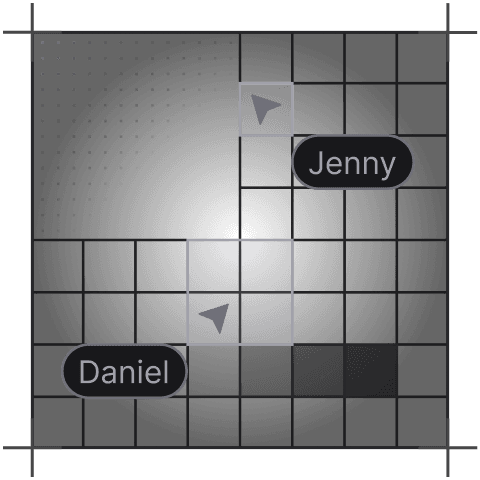
Collaborative environment
Writers, designers, and editors can all jump in at the same time without breaking each other’s work. Add comments and approvals. View version histories for teamwork without the headache.
Highly customisable
If your design system can imagine it, you can use Storyblok to model it. There are custom fields, workflows, and logics that can bend to your stack rather than the other way around.
Tell us what you're building. We reply within one working day — Jono or someone on the team picks up every message personally.
Join the growing list of successful migrations