Case study
View case studySlingshot Bio
Roboto converged Slingshot Bio's WordPress and Shopify sites into one headless Shopify build on Next.js and Sanity, instrumented end to end and AI-ready.


Last verified:
Key pain points
The biggest challenge with KeystoneJS is that it hands you all the responsibility that a managed CMS would normally handle. Deployment is entirely on you, and the documentation around production hosting, Docker configuration, and scaling is thin. We've seen teams struggle to go from a smooth local development experience to a reliable production setup, especially if they don't have dedicated DevOps support. The admin UI Docker image alone can balloon to over a gigabyte, which is a headache for containerised deployments.
The community around Keystone is significantly smaller than competitors like Strapi or Payload. That means fewer tutorials, fewer plugins, and slower answers when you hit an edge case. The ecosystem of ready-made integrations is almost non-existent, so you'll be building most things from scratch. For an agency working on client projects with deadlines, that time cost adds up quickly.
Content editors also tend to have a harder time with Keystone compared to more polished alternatives. The admin UI is functional but feels utilitarian, and non-technical users often need more onboarding than you'd expect. There's no visual editing, no preview infrastructure, and no real content workflow features like drafts, publishing schedules, or approval chains without building them yourself. If your client's content team needs a CMS they can pick up and run with, Keystone usually isn't the answer.

Deployment complexity
Self-hosting is the only option, and the docs don't hold your hand. Getting Keystone into production requires real infrastructure knowledge, and the large Docker image sizes make it worse.

Small community and ecosystem
Compared to Strapi or even Payload, the community is much smaller. Fewer plugins, fewer tutorials, and slower support when things go wrong.

No built-in content workflows
There are no turnkey drafts, scheduled publishing, or approval chains. Keystone provides field primitives that can be assembled into publishing workflows, but you need to wire them up yourself.
Admin UI feels dated
The admin panel is functional but lacks the polish and UX of modern CMS interfaces. Non-technical editors often find it confusing and need more training.

No visual editing or live preview
There's no way for editors to see content in context before publishing. You'd need to build your own preview infrastructure, which is a significant engineering effort.

Scaling requires significant effort
Running Keystone under high traffic means managing session stores, reverse proxies, and server resources yourself. It doesn't scale as smoothly as cloud-native CMS alternatives.
Expert migration services
Migrating your website content can be complex, but you don't have to do it alone. At Roboto Studio, we specialize in seamless CMS migrations, ensuring your valuable content is transferred efficiently and accurately.
Leveraging a combination of cutting-edge AI tools, advanced web scraping techniques, and our extensive experience in website integration, we handle the intricacies of moving your data. Whether you're upgrading your platform or consolidating systems, we provide tailored solutions to meet your specific needs.
Trust our expertise to manage your migration project, minimizing downtime and preserving data integrity, so you can focus on what you do best.
Schema-as-code with full TypeScript support
Define your entire content model in TypeScript with strong type inference throughout. The schema drives everything from the database to the admin UI to the GraphQL API.

Automatic GraphQL API generation
Every content type you define automatically gets a full CRUD GraphQL API with filtering, pagination, and relationship resolution. No manual endpoint wiring needed.
Prisma-powered database layer
Built on Prisma ORM with automatic migration generation and type-safe queries. Supports PostgreSQL, MySQL, and SQLite out of the box.
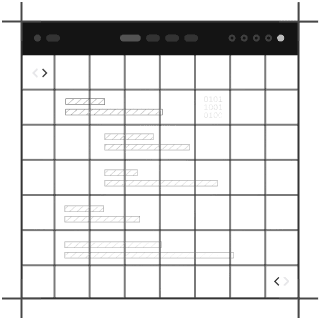
Flexible document field editor
The rich text editor supports custom embedded components that map to your design system, giving content editors structured authoring without sacrificing flexibility.
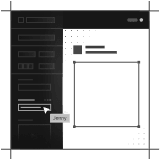
Granular access control
Fine-grained, field-level access control defined in code. You can write custom logic for create, read, update, and delete operations per field or per list.

Fully open source with no vendor lock-in
MIT licensed with no paid tiers or proprietary features gated behind a subscription. You own the entire stack and can host it wherever you want.
Tell us what you're building. We reply within one working day — Jono or someone on the team picks up every message personally.
Join the growing list of successful migrations