Framer logo
Uniform logo

From Framer to Uniform

We are the Framer to Uniform migration experts

Last verified:


Challenges with Framer

Key pain points

Framer looks incredible until you ask it to behave like a real CMS. The moment you go beyond a tiny blog or a five-page marketing site, the cracks show fast.

The CMS is bare-bones, the editor eats half your screen. Let's not forget the slow previews, sticky panels, and random bugs that make you question your life choices.

And then there’s the pricing. The entry-level CMS plan caps you at one collection, and once you start getting traffic or adding more collections, you move into $20–$40+ per collection per month territory. Framer simply isn’t built for deep structures, complex logic, or anything resembling enterprise workflows. If you’re already knee-deep in a Framer setup and not sure whether to scale, switch, or salvage, reach out to us. We’ll help you figure out the smartest path forward (and save you from the pain).
Help me migrate


Basic CMS

Basic CMS

Framer’s CMS works for blogs and small sites, but anything bigger starts to feel cramped. If you are looking for complex structures, relationships, or enterprise-level content operations, you’ll hit the walls quickly.
Not built for serious eCommerce

Not built for serious eCommerce

It can handle a simple store, but anything custom, multi-variant, or large-scale becomes a hackathon. If you’re planning real eCommerce, you’ll want something sturdier.
Only friendly for designers

Only friendly for designers

If you’ve never touched design tools, the UI has a learning curve, and there’s no deep tutorial to hold your hand. You’re on your own after the basics.
Limited advanced features

Limited advanced features

Things like user roles, workflows, or deep automation are difficult on Framer. Great for designers; less great for anyone who needs serious operational features.
Small plugin ecosystem

Small plugin ecosystem

The community is growing, but nowhere near Webflow or mature CMS platforms. If you need niche integrations or extensions, expect roadblocks or custom work.
Not suited for complex or multi-language sites

Not suited for complex or multi-language sites

As soon as you need structured data, heavy localisation, or custom code, Framer starts to feel restrictive. Headless CMS platforms handle this far better.


Benefits of Uniform

Key advantages

Uniform positions itself as a “composable DXP,” which is enterprise-speak for “it does a bit of everything on top of your actual CMS.” To be fair, the visual workspace is genuinely useful. Marketers get drag-and-drop control, personalization, and A/B testing without pinging developers every five minutes. And if you’re already juggling multiple systems (CMS, commerce, DAM), the orchestration layer can tidy up the chaos.

That said… we’ll be honest, we don’t really build with DXPs like this anymore. Whenever a headless tool starts shouting “DXP” from the homepage, it usually means heavyweight architecture, unnecessary complexity, and a bill only Fortune 500 companies would smile at. If you’re considering it anyway, feel free to get in touch. We’ll happily walk you through better, modern alternatives before you sink a quarter’s budget into something you probably don’t need.
Start my migration


Dark UI wireframe on a grid with a left panel of icons and a right panel of content blocks and a progress bar, connected by an arrow.

Visual experience composition

Uniform’s visual builder lets marketers piece together pages without pinging developers every 5 minutes. It’s basically a drag-and-drop layer on top of your headless stack.
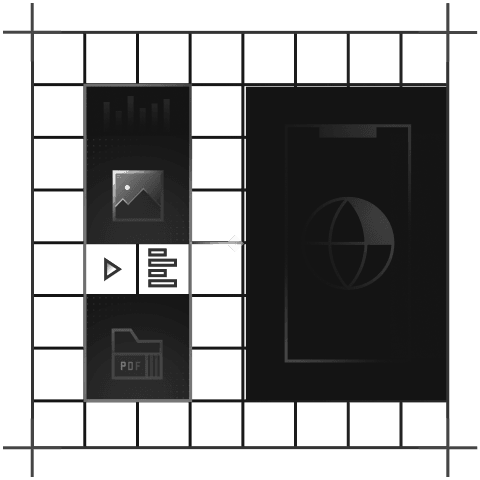
Multi-source content federation

Multi-source content federation

Uniform pulls content from multiple CMSs, DAMs, and commerce tools into one interface, so you don’t need 10 tabs open to build a single page
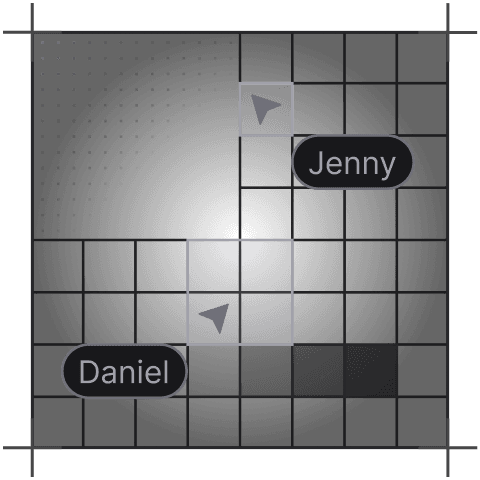
Real-time collaboration tools

Real-time collaboration tools

Teams can edit, plan, and experiment together without overwriting each other’s work. It’s built for big organisations where ten people touching the same page is a weekly occurrence.
Grid with a central lightning bolt icon, a surrounding dotted effect, and black areas in opposite corners.

Enterprise-grade scalability

Uniform is built to handle traffic spikes and heavy personalisation workloads. It’s overkill for small sites but a safe bet for enterprises terrified of a Black Friday outage.

Dark gray, dotted globe with a large marker over Europe and three smaller markers.

Omnichannel content management

You can pipe the same content across web, apps, and any other channel marketing dreams up. Useful for brands juggling multiple experiences without wanting to rebuild the same page three times.
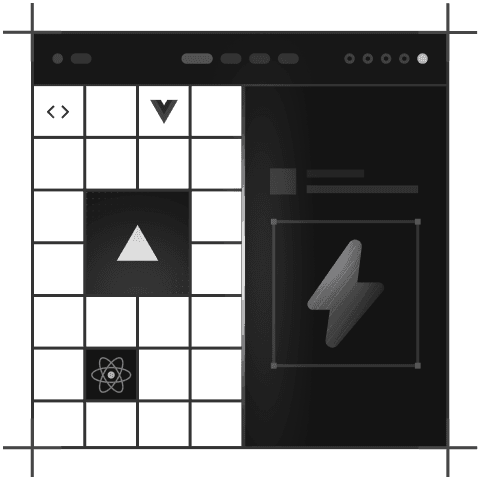
Built-in A/B testing

Built-in A/B testing

Uniform ships with native testing and targeting, so teams can experiment without gluing together half a dozen tools. It’s marketer-friendly and fast.


Common questions

Framer to Uniform migration FAQs

Answers to the most common questions about Framer to Uniform migration

How much does Framer cost for a real website?
Framer's free plan is heavily restricted (2 pages, framer.site subdomain, Framer branding). The Mini plan is $5/month (billed yearly), Basic is $15/month, and Pro is $30/month. Where costs escalate is the CMS. The basic CMS plan limits you to 1 collection, and adding more collections pushes you into $20-$40+ per collection per month. For a site with a blog, case studies, and a team directory (three collections), you're looking at $90-$150/month before any custom domain or analytics add-ons. That's not cheap for what is essentially a visual website builder. Compare that to a headless CMS on a free tier plus $20/month Vercel hosting, and the math starts working against Framer quickly.
Can you move a Framer site to a headless CMS without losing the design?
Yes, and we've done this for several clients. The design itself translates well to a modern frontend because Framer sites are essentially CSS layouts with animations. We rebuild the visual design in Next.js (or whatever framework fits), which usually produces a faster, more performant version of the same site. CMS content exports from Framer's collections through their API, though the data structures are simple so the migration is straightforward. Animations need manual recreation using a library like Motion for React, but the results are typically better than Framer's output. The whole process takes 4-8 weeks for a typical marketing site.
What are the best alternatives to Framer for a growing company?
It depends on what you're outgrowing. If you want to keep the visual editing experience, Webflow offers more CMS depth and ecommerce capabilities, though it has its own scaling limitations. If you want full control, a headless CMS (Sanity is our pick) paired with Next.js gives you unlimited flexibility in content modelling, design, and performance. Builder.io is worth considering if your marketing team needs to build pages independently, though the vendor lock-in is a concern. For most growing companies, we recommend the headless CMS plus custom frontend route because it scales without platform ceilings and your design is never limited by what a visual builder supports.
When should you stop using Framer and switch to something else?
Three signals tell you it's time. First, your CMS needs exceed what collections can handle. If you need relational content, structured data beyond flat lists, or more than a handful of collection types, Framer's CMS will hold you back. Second, performance. Framer sites can get sluggish with heavy animations and large pages, and you have limited control over optimisation. Third, development workflows. If your team includes developers who want version control, CI/CD pipelines, and the ability to write custom logic, Framer's no-code environment becomes a constraint. We've migrated Framer sites for companies that hit all three of these walls simultaneously, usually around the 20-30 page mark with 3+ content types.
How do we migrate away from Uniform?
Uniform is an orchestration layer, not a traditional CMS, so migration means detangling it from the systems it sits on top of. Your actual content likely lives in a separate CMS, DAM, or commerce platform. The Uniform-specific parts, including composition layouts, personalisation rules, and A/B test configurations, need to be rebuilt in your target platform or replaced with dedicated tools. We typically spend 2 to 4 weeks on Uniform-specific teardown, on top of whatever migration the underlying content sources require.
Why do teams leave Uniform?
The price-to-value ratio is the most common complaint. Uniform's enterprise pricing is steep, and teams find they're paying premium rates for an abstraction layer that adds complexity rather than removing it. The learning curve is real. Teams consistently need weeks of onboarding to become productive, and the orchestration model introduces debugging overhead that frustrates both developers and content editors. When the contract comes up for renewal, many teams conclude they'd be better served by a simpler architecture.
Do we actually need a DXP like Uniform?
Probably not. We've worked with teams that adopted Uniform because they were managing content across 4 or 5 different systems and wanted a single editing interface. In practice, most of those teams would have been better off consolidating into one strong headless CMS and using it as the single source of truth. The "composable DXP" pitch sounds good in a sales deck, but it often means you're paying enterprise prices to glue together tools that could be replaced by a cleaner architecture. We're happy to audit your stack and give you an honest answer.


Get in touch

Fill out the form below and we'll get back to you