Framer logo
Prismic logo

From Framer to Prismic

We are the Framer to Prismic migration experts

Last verified:


Challenges with Framer

Key pain points

Framer looks incredible until you ask it to behave like a real CMS. The moment you go beyond a tiny blog or a five-page marketing site, the cracks show fast.

The CMS is bare-bones, the editor eats half your screen. Let's not forget the slow previews, sticky panels, and random bugs that make you question your life choices.

And then there’s the pricing. The entry-level CMS plan caps you at one collection, and once you start getting traffic or adding more collections, you move into $20–$40+ per collection per month territory. Framer simply isn’t built for deep structures, complex logic, or anything resembling enterprise workflows. If you’re already knee-deep in a Framer setup and not sure whether to scale, switch, or salvage, reach out to us. We’ll help you figure out the smartest path forward (and save you from the pain).
Help me migrate


Basic CMS

Basic CMS

Framer’s CMS works for blogs and small sites, but anything bigger starts to feel cramped. If you are looking for complex structures, relationships, or enterprise-level content operations, you’ll hit the walls quickly.

Not built for serious eCommerce

Not built for serious eCommerce

It can handle a simple store, but anything custom, multi-variant, or large-scale becomes a hackathon. If you’re planning real eCommerce, you’ll want something sturdier.

Only friendly for designers

Only friendly for designers

If you’ve never touched design tools, the UI has a learning curve, and there’s no deep tutorial to hold your hand. You’re on your own after the basics.

Limited advanced features

Limited advanced features

Things like user roles, workflows, or deep automation are difficult on Framer. Great for designers; less great for anyone who needs serious operational features.

Small plugin ecosystem

Small plugin ecosystem

The community is growing, but nowhere near Webflow or mature CMS platforms. If you need niche integrations or extensions, expect roadblocks or custom work.

Not suited for complex or multi-language sites

Not suited for complex or multi-language sites

As soon as you need structured data, heavy localisation, or custom code, Framer starts to feel restrictive. Headless CMS platforms handle this far better.


Benefits of Prismic

Key advantages

Prismic is phenomenal for simplistic page-builder-style websites. Its simplistic drag-and-drop page builder, along with the newer code-based version, helps you generate like-for-like components and automates the developers' process.

The built-in media optimisation tool is also great, so you can ensure that even if you're uploading 4mb images, they're going to be scaled down with minimal compression artefacts.

Start my migration


Content scheduling capabilities in Prismic

Content scheduling capabilities

Prismic makes it ridiculously easy to plan content ahead with built-in scheduling without any plugins or workarounds. Just pick a time, hit schedule, and your release goes live exactly when you want it.

Prismic has an intuitive visual editor

Intuitive visual editor

The editor feels natural even for non-technical teams, with clean previews and simple fields. It keeps the writing flow distraction-free while still giving developers structure.
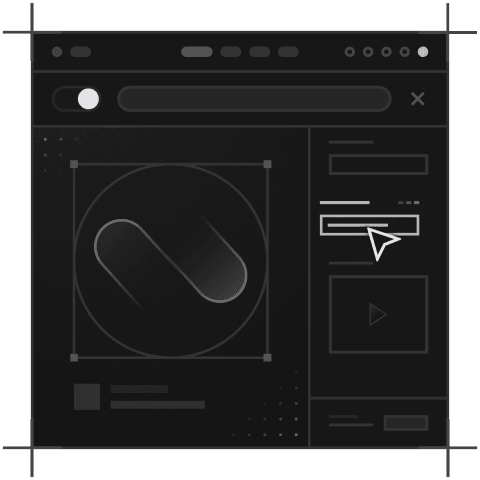
Dark-mode UI in a browser window shows a stylized oval graphic with a bounding box and a cursor on a sidebar input field.

Efficient slices feature

Slices let you build repeatable, flexible components that marketers can rearrange without breaking layouts. It’s the closest thing to structured Lego-blocks for content teams.

Dark mode UI wireframe showing a left sidebar with icons and a main content panel with a progress bar and form elements.

Rich media embedding

Embedding images, videos, and rich assets takes seconds. You don't need to hack templates. Just paste, pick, and publish.
Flexible component reuse

Flexible component reuse

Developers create once, marketing teams reuse forever. Slices and custom types make content scalable without adding complexity.

Gray 6-point cog with dark center and two concentric rings on a black grid.

Seamless publishing experience

Publishing is fast, predictable, and drama-free. If you want to do a small tweak or a full-page release, everything ships smoothly with minimal cognitive load.


Common questions

Framer to Prismic migration FAQs

Answers to the most common questions about Framer to Prismic migration

How much does Framer cost for a real website?
Framer's free plan is heavily restricted (2 pages, framer.site subdomain, Framer branding). The Mini plan is $5/month (billed yearly), Basic is $15/month, and Pro is $30/month. Where costs escalate is the CMS. The basic CMS plan limits you to 1 collection, and adding more collections pushes you into $20-$40+ per collection per month. For a site with a blog, case studies, and a team directory (three collections), you're looking at $90-$150/month before any custom domain or analytics add-ons. That's not cheap for what is essentially a visual website builder. Compare that to a headless CMS on a free tier plus $20/month Vercel hosting, and the math starts working against Framer quickly.
Can you move a Framer site to a headless CMS without losing the design?
Yes, and we've done this for several clients. The design itself translates well to a modern frontend because Framer sites are essentially CSS layouts with animations. We rebuild the visual design in Next.js (or whatever framework fits), which usually produces a faster, more performant version of the same site. CMS content exports from Framer's collections through their API, though the data structures are simple so the migration is straightforward. Animations need manual recreation using a library like Motion for React, but the results are typically better than Framer's output. The whole process takes 4-8 weeks for a typical marketing site.
What are the best alternatives to Framer for a growing company?
It depends on what you're outgrowing. If you want to keep the visual editing experience, Webflow offers more CMS depth and ecommerce capabilities, though it has its own scaling limitations. If you want full control, a headless CMS (Sanity is our pick) paired with Next.js gives you unlimited flexibility in content modelling, design, and performance. Builder.io is worth considering if your marketing team needs to build pages independently, though the vendor lock-in is a concern. For most growing companies, we recommend the headless CMS plus custom frontend route because it scales without platform ceilings and your design is never limited by what a visual builder supports.
When should you stop using Framer and switch to something else?
Three signals tell you it's time. First, your CMS needs exceed what collections can handle. If you need relational content, structured data beyond flat lists, or more than a handful of collection types, Framer's CMS will hold you back. Second, performance. Framer sites can get sluggish with heavy animations and large pages, and you have limited control over optimisation. Third, development workflows. If your team includes developers who want version control, CI/CD pipelines, and the ability to write custom logic, Framer's no-code environment becomes a constraint. We've migrated Framer sites for companies that hit all three of these walls simultaneously, usually around the 20-30 page mark with 3+ content types.
How much does Prismic cost?
Prismic has a free plan for 1 user with limited API calls. The Starter plan is $7/month per user for small teams. The Small plan is $150/month for up to 25 users with more locales and API bandwidth. Medium is $500/month. Large and Enterprise plans go higher. The pricing jumps are significant once you need multiple locales or repositories. We've had clients hit the ceiling on the Small plan faster than expected because of how Prismic counts API calls and custom types.
What are the best Prismic alternatives?
Sanity is the alternative we recommend most. It gives you better content modelling, real-time collaboration, and a query language (GROQ) that's far more flexible than Prismic's API. Contentful is another option with a bigger ecosystem, though pricing is steeper. If you liked Prismic's Slices concept, Sanity's block-based content approach works similarly but with more depth. We've migrated multiple former Prismic agency partners to Sanity, and the developer experience improvement is always the first thing they mention.
Can I migrate from Prismic to another CMS?
Yes. We've migrated quite a few Prismic projects, mostly to Sanity. We export your custom types, documents, and media through Prismic's API, then restructure everything for the target platform. Prismic's Slice-based content maps well to Sanity's portable text and block system. Typical migrations take 3-5 weeks. We keep your existing Prismic site live throughout, so there's no downtime. The biggest challenge is usually handling Prismic's media library, since images need to be moved to a new CDN.
Is Prismic a good CMS for developers?
It's decent for simple projects. The Slice Machine tooling is clever and the TypeScript support has improved. But Prismic's API has limitations that frustrate developers on bigger projects. You can't do complex queries, filtering is basic, and the content modelling is shallow compared to Sanity or Contentful. The bigger issue is Prismic's track record of breaking API changes and infrastructure shifts that have caused production outages. Developers who need reliability and deep customization are better served elsewhere.
Why are teams leaving Prismic?
The main reasons we hear are API instability, limited content modelling depth, and pricing that doesn't match the feature set. Prismic has a history of making breaking changes to their API and infrastructure without adequate migration paths. One major version change left agencies (including us, when we were partners) with broken client sites and expensive rebuild bills. Teams also outgrow the content modelling quickly. Once you need complex relationships between content types, Prismic's flat structure becomes a bottleneck.


Get in touch

Fill out the form below and we'll get back to you