Case study
View case studySlingshot Bio
Roboto converged Slingshot Bio's WordPress and Shopify sites into one headless Shopify build on Next.js and Sanity, instrumented end to end and AI-ready.


Last verified:
Key pain points
Directus looks fantastic in demos, but things get rocky once you actually try to use it at scale. The Team cloud plan is $499/month (or $599 billed monthly) and caps you at 10 SSO seats, 50 collections, and 20 flows — grow past those limits and you're straight into custom Enterprise territory. The v12 move to the Monospace Sustainable Core License (MSCL) has also rattled the community; smaller orgs get a free Innovation Grant, but larger teams are navigating a licensing landscape that changed significantly from what they signed up for.
On the dev side, updates can introduce breaking changes, the documentation doesn't always keep pace, and the extension ecosystem is pretty thin. Localization is technically supported but fiddly and easy to misconfigure, and large datasets make the UI noticeably sluggish. And if you want anything deeply custom, you're suddenly living in Vue.js land, which is not where most teams want to spend their weekends.

Breaking update changes
Directus explicitly does not follow semver — any release may include breaking changes. The v10 to v11 upgrade hit schema changes and dropped fields, and the v11 UI scale change (px to rem) broke extensions hardcoding pixel values. Plan your upgrade windows carefully.

Limited extension ecosystem
The plugin ecosystem is still pretty bare. Anything even mildly niche ends up becoming a "let's just custom build it" moment, which defeats the purpose of picking a CMS with extensions. The marketplace launched in beta in early 2024 and is still maturing.

Complex localization setup
Yes, it supports multilingual content, but setting it up feels like assembling IKEA furniture blindfolded. It works, but expect extra config, extra steps, and extra patience.
Version history still tier-gated
Global draft versions now ship automatically with every versioned item — no manual setup required as of March 2026 — which is a genuine improvement. Full version history, rollbacks, and controlled releases are still locked behind higher-tier plans, though, so if predictable publishing workflows are a must, check your tier carefully before committing.

Vue.js knowledge requirement
Custom interfaces and deeper tweaks need Vue.js, so if your team only speaks React, prepare for a small identity crisis (or a hiring plan).
Large dataset performance issues
Heavy tables and deeply relational data can slow down queries and the UI — community reports show 25K-row datasets where raw SQL runs in milliseconds but the Directus API takes 20+ seconds, largely due to internal query overhead and no auto-indexes on foreign keys.
Expert migration services
Migrating your website content can be complex, but you don't have to do it alone. At Roboto Studio, we specialize in seamless CMS migrations, ensuring your valuable content is transferred efficiently and accurately.
Leveraging a combination of cutting-edge AI tools, advanced web scraping techniques, and our extensive experience in website integration, we handle the intricacies of moving your data. Whether you're upgrading your platform or consolidating systems, we provide tailored solutions to meet your specific needs.
Trust our expertise to manage your migration project, minimizing downtime and preserving data integrity, so you can focus on what you do best.
Intuitive non-technical interface
Editors get a clean, no-code admin panel that feels more like a productivity tool than a CMS. Non-technical teams can handle content updates without pinging developers every five minutes.
Database-agnostic SQL integration
Directus plugs straight into your SQL database and turns it into an API instantly. If your data lives in Postgres, MySQL, MariaDB, or SQLite, it just works.
Field-level permission controls
You can lock down every field, table, and action with granular role-based permissions. Perfect for teams that care about security and don't want interns accidentally deleting production data.
Built-in REST/GraphQL support
Your entire database is instantly exposed as both REST and GraphQL endpoints. Just plug into your frontend and start shipping.
Extensive UI customization
Directus lets you tweak the interface, add custom views, tailor layouts, and build the exact editing experience your team needs. It feels like a CMS you can actually shape instead of fight.
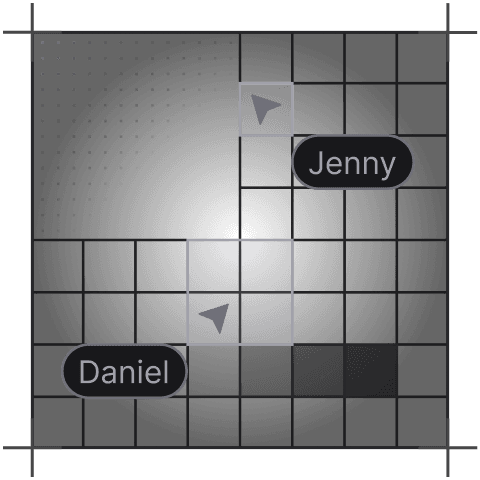
Real-time collaborative editing
Multiple contributors can work in the Studio at the same time without stepping on each other's toes. Collaborative editing shipped in February 2026, so drafts stay clean and the whole workflow feels built for modern teams, not 2010 intranets.
AI Assistant with image and PDF support
The built-in AI Assistant can process images and PDFs as well as text, and it works across OpenAI, Anthropic, and Google Gemini. It's a genuinely useful addition rather than a feature-list checkbox.
Tell us what you're building. We reply within one working day — Jono or someone on the team picks up every message personally.
Join the growing list of successful migrations