Contentstack logo
Magnolia logo

From Contentstack to Magnolia

We are the Contentstack to Magnolia migration experts

Last verified:


Challenges with Contentstack

Key pain points

Contentstack comes with a hefty price tag and an even heftier learning curve. You don’t just “spin it up,” you architect it, model it, train teams, fight through workflows, and hope your budget survives the onboarding. The editor can drag when the content tree gets big, and the visual builder starts feeling like it's running a marathon with ankle weights.

Pricing is also locked behind sales calls and enterprise paperwork. Good luck, if you want to switch platforms later. The custom setups and integrations turn migration into a full-blown project. Even with strong APIs, a lot of “advanced” tasks still need bespoke dev work, meaning you’ll rely on specialists whether you like it or not.

Help me migrate


Steep learning curve

Steep learning curve

Even seasoned teams need time to get comfortable. Content modeling and workflows aren’t “plug and play,” expect onboarding sessions and a couple of headaches.

Grayscale gear with a dark center dot, surrounded by two concentric rings, on a grid background.

Complex initial setup

Getting everything wired up the way you want takes real developer hours. This isn’t a “spin it up on a Friday” CMS.

Performance lags in editor

Performance lags in editor

Large content models and lots of entries can make the editor feel sluggish, especially when teams scale up.
Dark code editor displaying abstract lines of code and binary numbers.

Limited self-service customization

Anything beyond the basics tends to require a developer. Marketers won’t be bending this platform to their will alone.
Editor usability concerns

Editor usability concerns

The visual builder is powerful but can get overwhelming fast, especially with deep nesting or complex blocks.
Dark themed web development interface showing a component palette with Vue and React icons, and a lightning bolt in a preview pane.

Content modeling complexity

You’ll spend time architecting your content upfront. If your team isn’t used to strict modeling, brace yourself.


Benefits of Magnolia

Key advantages

Magnolia shines if you’re the kind of organisation that genuinely needs the full DXP kitchen sink. It packs personalisation, workflows, multi-site orchestration, multilingual publishing, DAM, marketing automation hooks, and every enterprise acronym you can think of. If your teams run complex global content operations with strict governance, Magnolia’s mature permission system, stability, and long-standing enterprise reputation make it a safe, compliant option.

To be transparent, we don’t actually prefer or build with Magnolia (or any of the DXP-flavoured headless CMSs). They try to do everything, and like most jack-of-all-trades platforms, they don’t excel at the things modern teams actually need that is speed, flexibility, clean workflows, and sane pricing. We’d happily point you toward modern alternatives like Sanity that give you 10× the agility without the enterprise bloat.
Start my migration


A grid with striped blocks forming a square path around a central warning sign, with dashed arrows indicating clockwise movement.

Java-based enterprise integration

Built on Java, Magnolia plugs neatly into large enterprise stacks that already rely on Java systems and legacy infrastructure. If your organisation lives and breathes JVM, Magnolia won’t fight your architecture.

Secure, scalable architecture

Secure, scalable architecture

Magnolia’s core is engineered for high-security, high-traffic environments, with strong access control, clustering, and enterprise-grade stability. It’s built to survive heavy editorial activity and large content delivery demands.
Grayscale UI wireframe showing a left sidebar with icons and a right content panel with forms and a progress bar.

Real-time page templating

Editors can adjust components and layouts and immediately preview results, making large enterprise content operations faster and less error-prone.
Editable component previews

Editable component previews

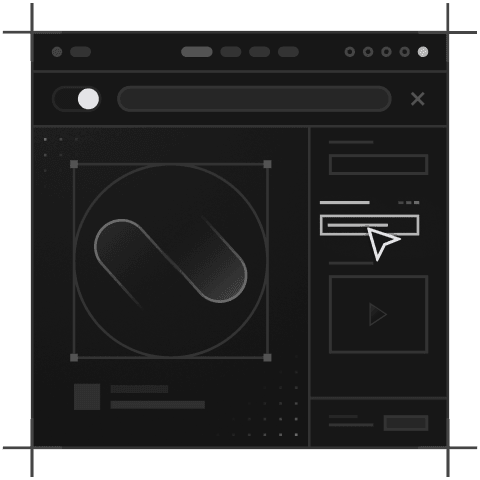
Magnolia’s component-level previewing gives editors clarity on how complex pages come together, reducing back-and-forth with developers and keeping multi-team workflows sane.

Multi-site management tools

Multi-site management tools

Designed for global brands, Magnolia supports multiple sites, languages, and regional variations under one roof.

Advanced workflow automation

Advanced workflow automation

From multi-step approvals to compliance-driven publishing flows, Magnolia handles heavyweight governance. This is the stuff big enterprises actually need when 20 departments want access but only 2 should publish.


Common questions

Contentstack to Magnolia migration FAQs

Answers to the most common questions about Contentstack to Magnolia migration

How much does Contentstack cost?
Contentstack doesn't publish pricing, which is standard for enterprise DXP platforms and frustrating for everyone else. Based on what we've seen, expect the entry point for a small team to start around $3,000-$5,000/month, with enterprise contracts landing in the $50,000-$150,000+ per year range depending on API usage, regions, and seats. Implementation costs run separately and typically require 8-16 weeks of developer time. If you're comparing against Contentful or Sanity at the enterprise level, Contentstack is generally in the same ballpark as Contentful but significantly more expensive than Sanity for comparable functionality.
Is Contentstack worth the investment for mid-sized teams?
For most mid-sized teams, no. Contentstack was built for Fortune 500 content operations with global teams, complex approval chains, and multi-region delivery requirements. If your team has 5-15 people managing content across 2-3 markets, you're paying enterprise prices for capabilities you'll never fully use. The workflows and governance tools are genuinely good, but they come with complexity overhead that slows smaller teams down. We typically steer mid-sized companies toward Sanity or Contentful, which offer strong workflow controls without the enterprise onboarding burden. Contentstack makes sense when you have 50+ content editors across multiple regions. Below that threshold, leaner platforms deliver more value per dollar.
How hard is it to migrate off Contentstack?
Harder than most headless CMS platforms because of the custom integration layer. Contentstack's composable architecture means teams typically build extensive webhook pipelines, custom extensions, and multi-step workflows that all live within the platform. Content extraction through their REST and GraphQL APIs is straightforward, but replicating the orchestration logic elsewhere takes real engineering effort. Schema migration is manageable if your content models are well-documented. Plan for 8-14 weeks for a full migration. The longest phase is usually rebuilding the approval workflows and publication pipelines in the target platform, since Contentstack's workflow engine is one of its strongest features and the part teams rely on most.
What should enterprise teams consider before choosing Contentstack?
Ask three questions first. Do you actually need multi-region CDN delivery and MACH-compliant architecture, or is that just nice to have? If you're serving one market from one region, you're paying for global infrastructure you won't use. Second, does your editorial team have the patience for a steep onboarding curve? Contentstack's content modelling is powerful but requires careful upfront architecture. Third, what's your exit strategy? Contentstack contracts often span multiple years, and the custom integrations you build create switching costs that grow over time. We always recommend running a proof-of-concept with real content before signing an annual contract. That 2-week investment can save you from a 2-year mistake.
How long does it take to migrate away from Magnolia CMS?
Magnolia migrations are among the most involved we handle. The Java-based architecture, proprietary modules, and tightly coupled workflows mean there's no quick extract-and-import path. Content needs to be exported from Magnolia's JCR (Java Content Repository), transformed, and loaded into your target platform. For a mid-sized enterprise site with 1,000 to 5,000 pages, expect 8 to 16 weeks. The timeline depends heavily on how many proprietary modules your team has adopted and how complex your multi-site setup is.
Why do companies leave Magnolia?
Cost and agility are the two main drivers. Magnolia's enterprise licensing is opaque and expensive, with annual fees that balloon as you add modules and environments. Teams also get frustrated by the Java dependency. Finding and retaining Java CMS developers is harder and more expensive every year, especially when modern headless platforms let teams build with JavaScript and TypeScript instead. The vendor lock-in from proprietary modules makes the decision feel overdue by the time teams finally commit to migrating.
Can we migrate from Magnolia to a headless CMS without losing our multi-site setup?
Yes, but the approach changes. Magnolia handles multi-site through its own orchestration layer, while headless platforms like Sanity use workspace configurations or project-level separation. We rebuild multi-site architectures using the target CMS's native multi-tenancy features. The content migration itself is the simpler part. The harder work is re-implementing your personalisation rules, approval workflows, and permission structures outside of Magnolia's proprietary ecosystem.


Get in touch

Fill out the form below and we'll get back to you