Case study
View case studyJamb
We rebuilt Jamb on Sanity and Next.js, merging two legacy PHP sites into one calm catalogue without losing the SEO equity their antique and reproduction collections had built up.



From ButterCMS to Directus
Last verified:
Key pain points
Where ButterCMS starts to show cracks is when projects grow beyond its comfort zone. The content modeling is adequate for straightforward use cases, but it lacks the depth and flexibility of platforms like Sanity or Contentful. Components are only available for pages, not collections or blog posts, which creates frustrating inconsistencies when you're trying to build a cohesive content architecture. The 1,000 content field limit, even on expensive plans, can become a real ceiling for ambitious projects.
The platform's smaller ecosystem is a double-edged sword. While anyone who knows JavaScript can work with the API, you won't find the same depth of community resources, plugins, or third-party integrations that larger platforms offer. Media management is also noticeably behind, with no bulk upload capability and limited asset organisation tools. For agencies managing multiple client sites, these paper cuts add up quickly.
There have also been transparency concerns. In 2024, a DNS incident affected thousands of sites using ButterCMS, but their status page showed no downtime. That kind of communication gap is a red flag for any team relying on a third-party CMS in production. The pricing, while competitive on the surface, can feel steep for smaller teams once you move past the limited free tier, and the jump between plans isn't always proportional to what you get.
Limited content modeling flexibility
Components are only available for pages, not collections or blog posts. This creates awkward workarounds when you need consistent structured content across different content types.
Content field limits on all plans
Even the most expensive plans cap you at 1,000 content fields. For complex, multi-locale projects this ceiling arrives faster than you'd expect.
No bulk media upload
The media library only supports single-file uploads with limited organisation tools. Managing assets across a large site becomes tedious quickly.

Small ecosystem and community
Compared to Contentful or Sanity, the community is tiny. Fewer plugins, fewer tutorials, and fewer developers with direct experience means more problem-solving on your own.

Transparency concerns around incidents
In 2024, a DNS incident reportedly affected sites using ButterCMS, but limited public acknowledgement on their status page raised concerns about transparency. The details are difficult to verify independently.
Pricing jumps between tiers
The free tier is very limited, and paid plans start at $71 per month. For small projects or startups, the cost can be hard to justify when alternatives offer more generous free tiers.
Key advantages
Directus instantly wins points with us because, well… it has a rabbit for a logo. But beyond that, it's genuinely a solid database-first CMS. If you like the idea of a CMS that sits directly on top of your SQL database without any abstractions, Directus feels incredibly natural.
You can self-host it, tweak it endlessly, and treat your schema exactly the way you want. Editors get a no-code admin UI that feels polished, developers get REST and GraphQL out of the box, and teams get workflows, versioning, automations, and proper permission controls. It's flexible, fast, and a great fit if your content is really just structured data waiting for a smarter interface. If your project revolves around relational data and you want total control from database to API, Directus is one of the cleanest ways to build it.
Intuitive non-technical interface
Editors get a clean, no-code admin panel that feels more like a productivity tool than a CMS. Non-technical teams can handle content updates without pinging developers every five minutes.
Database-agnostic SQL integration
Directus plugs straight into your SQL database and turns it into an API instantly. If your data lives in Postgres, MySQL, MariaDB, or SQLite, it just works.
Field-level permission controls
You can lock down every field, table, and action with granular role-based permissions. Perfect for teams that care about security and don't want interns accidentally deleting production data.
Built-in REST/GraphQL support
Your entire database is instantly exposed as both REST and GraphQL endpoints. Just plug into your frontend and start shipping.
Extensive UI customization
Directus lets you tweak the interface, add custom views, tailor layouts, and build the exact editing experience your team needs. It feels like a CMS you can actually shape instead of fight.
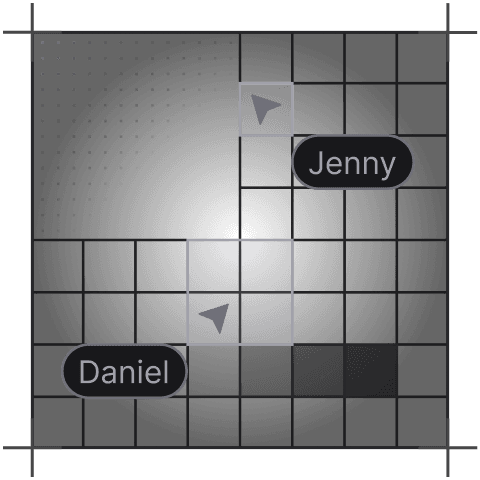
Real-time collaborative editing
Multiple contributors can work in the Studio at the same time without stepping on each other's toes. Collaborative editing shipped in February 2026, so drafts stay clean and the whole workflow feels built for modern teams, not 2010 intranets.
AI Assistant with image and PDF support
The built-in AI Assistant can process images and PDFs as well as text, and it works across OpenAI, Anthropic, and Google Gemini. It's a genuinely useful addition rather than a feature-list checkbox.
Tell us what you're building. We reply within one working day — Jono or someone on the team picks up every message personally.
Join the growing list of successful migrations